
Eye Clinic in Patiala for Check-Ups, Eye Tests, Glasses and Everyday Eye Care
Garg Eye Hospital runs an eye clinic in Patiala for everyday eye care: a full check-up, an eye test, a pressure test, a retina look, a glasses prescription and the glasses themselves. The clinic (OPD) is open Monday to Saturday, 9 AM to 5 PM, and Dr. Amandeep Garg, a phaco and LASIK surgeon, leads the care if you ever need surgery.
Quick answer
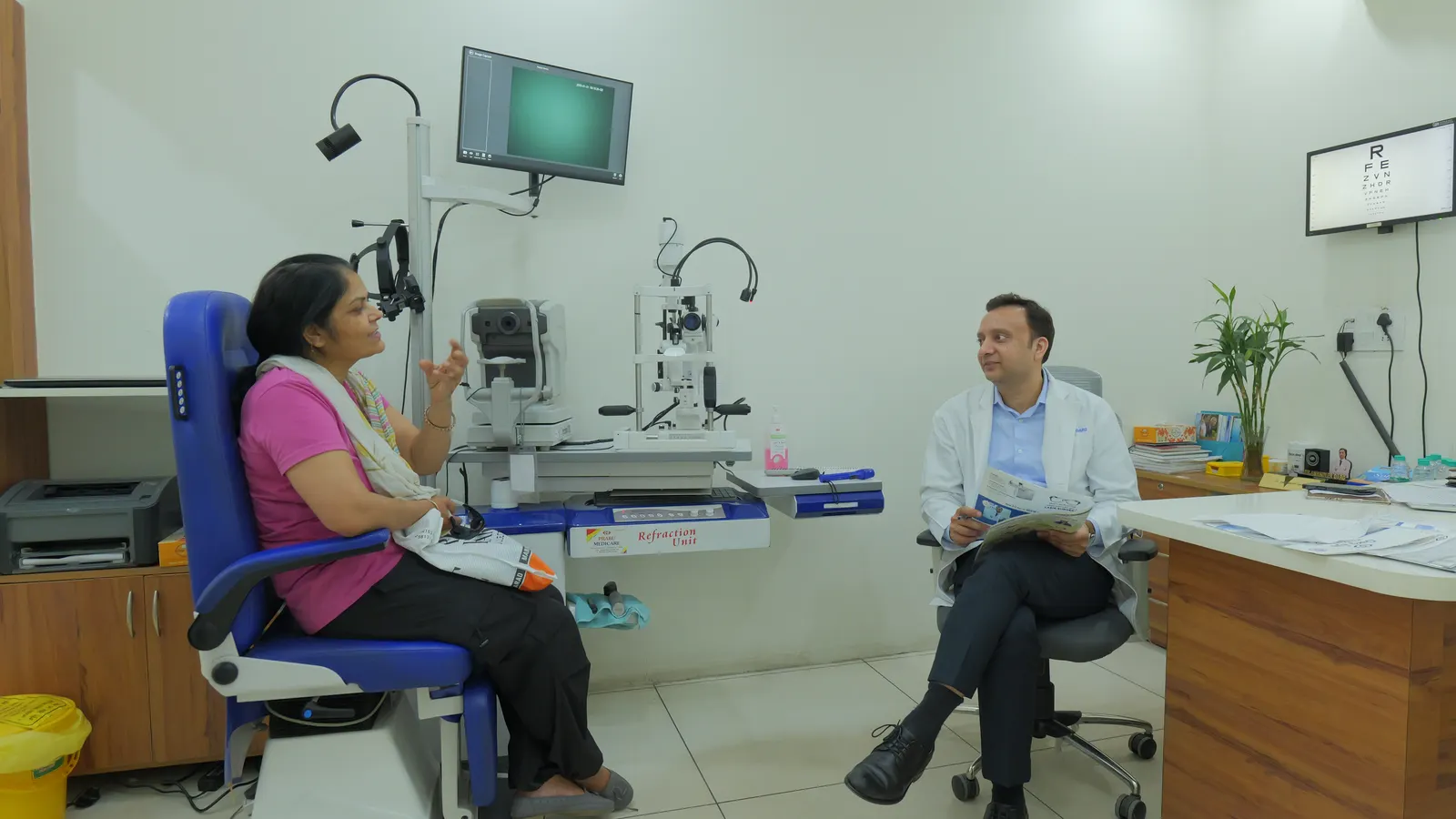
Garg Eye Hospital runs an eye clinic in Patiala where Dr. Amandeep Garg, MBBS, DNB, examines your eyes, tests your vision and eye pressure, looks at the retina and advises on glasses, drops or treatment. The OPD has been open since 2016, and an in-house optical shop and eye pharmacy sit in the same building. Patients rate it 5.0 on Google from more than 1,500 reviews. Many insurers and schemes are accepted for admitted treatment. OPD runs Monday to Saturday, 9 AM to 5 PM. Call +91 98554-91500.
What is an eye clinic, and how is it different from an eye hospital?
An eye clinic is where you go for day-to-day eye care. You walk in, you are examined, you get advice and a prescription, and you go home. An eye hospital does all of that and also has operation theatres, laser rooms and beds for surgery. Garg Eye Hospital is both. The clinic is the front door, and the hospital is behind it.
This matters because most eye problems never need surgery. Red eyes, tired eyes, new glasses, a child's school screening, a yearly diabetic check and a pressure test are all clinic work. If the examination finds something that needs a procedure, you do not have to start again at another place. Your records are already in the same building, and the same doctor continues your care. For the full list of operations and lasers, see our page on the eye hospital in Patiala.
| Eye clinic visit (OPD) | Eye hospital procedure | |
|---|---|---|
| Purpose | Examine, advise, prescribe | Operate or laser |
| Typical time | A few hours with tests | Planned day, usually day-care |
| Examples | Check-up, eye test, glasses, drops, review | Cataract surgery, LASIK, ICL |
| Bed needed | No | Sometimes |
| Insurance | Usually not claimable for OPD | Claimable for medically needed surgery |
Who should visit an eye clinic?
Almost everyone, at some point. Some groups should go on a schedule rather than waiting for a problem.
| Who | How often | Why |
|---|---|---|
| Children from age 3 to 4, and before school | Once, then every 1 to 2 years | Lazy eye and squint are easy to treat early and hard to treat late |
| Adults 20 to 39 | Every 2 years, or yearly if you use screens or glasses | Power changes, early disease |
| Adults 40 and above | Every year | Pressure test, cataract and retina check |
| Anyone with diabetes | Every year, even with clear sight | Diabetic eye disease has no early symptoms |
| Anyone with a family history of glaucoma | Every year | Glaucoma runs in families |
| Seniors 60 and above | Every 6 to 12 months | Cataract, glaucoma and macular change are common |
What does an eye clinic visit at Garg Eye Hospital include?
A visit is built around a set of tests, each one done by a machine that is made for one job. The doctor reads the results together and explains them to you.
- 1DeskName, phone, complaint noted
- 2Vision testChart reading and auto-refractometer
- 3PressureTonometer for glaucoma risk
- 4Slit lampCornea, lens and front of the eye
- 5DropsPupil widens in 20 to 30 minutes
- 6RetinaBack of the eye and optic nerve
- 7AdviceDoctor explains and prescribes
- 8Pharmacy and opticalMedicines and glasses in the same building
The vision test and auto-refractometer
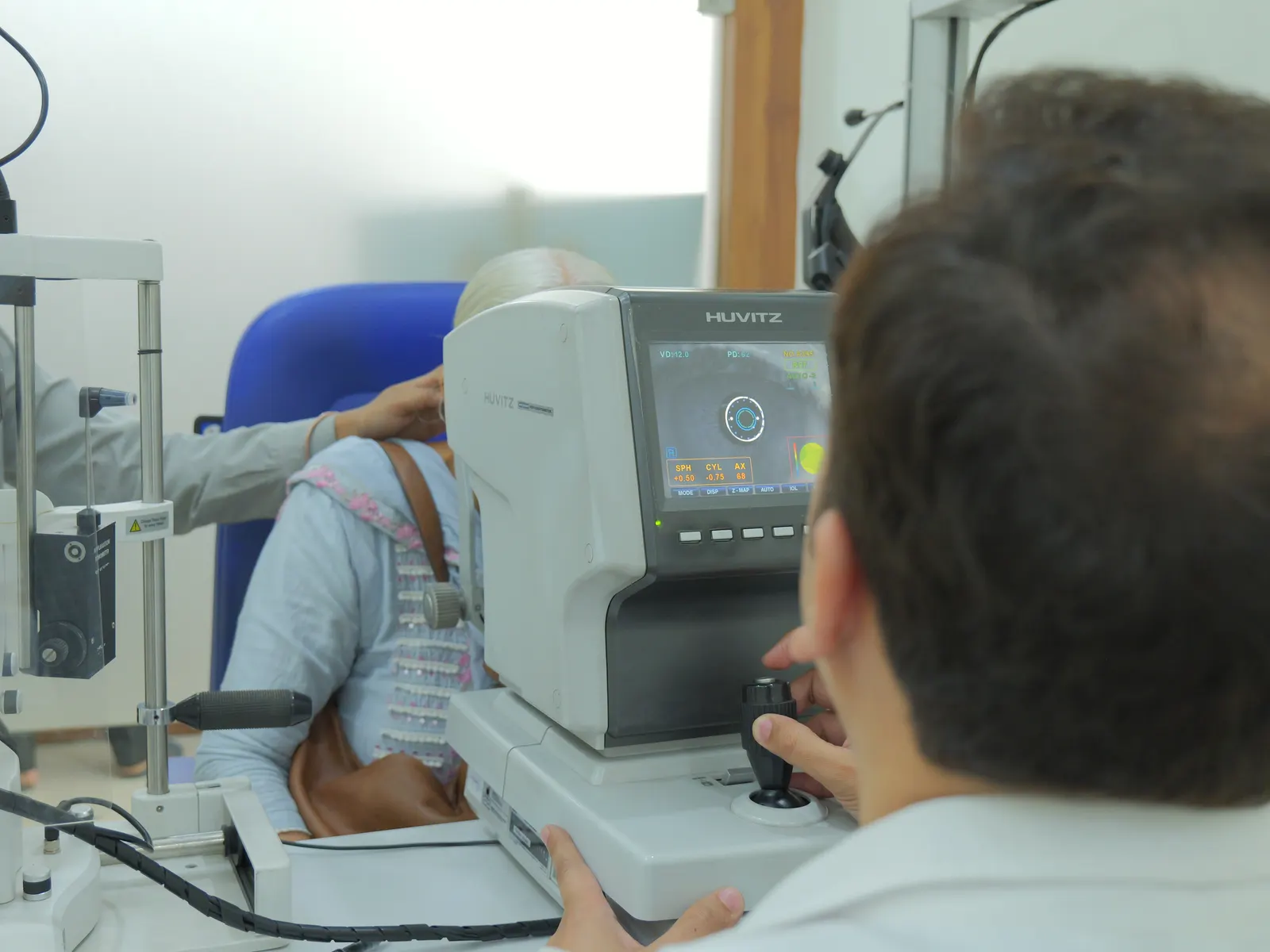
You read letters off a chart, and an auto-refractometer measures how your eye bends light. Together they give your glasses number. The machine gives a starting figure, and the doctor refines it by asking you to compare two lenses. This is the same test an optician does, but it is only the first step here.
The pressure test
A tonometer measures the pressure inside the eye. High pressure damages the optic nerve slowly and without pain. This is glaucoma (kala motia), a leading cause of irreversible blindness, and it is why anyone over 40 should have this test at least once.
The slit lamp examination
The slit lamp is a microscope with a bright strip of light. It lets the doctor see the cornea, the iris, the lens and the clear fluid in front of the eye at high magnification. A cataract (motiyabind) shows up here as a cloudy lens. Scars, infection and dryness show up on the cornea.
The dilated retina check
Drops widen the pupil so the doctor can look at the retina and the optic nerve at the back of the eye. This is the only way to find early diabetic eye disease, a retinal tear or early glaucoma damage. When the picture needs more detail, an OCT scan takes a cross-section of the retina. The drops blur near vision and make light uncomfortable for a few hours, so do not plan to drive.
Extra tests, only when needed
The hospital also has Pentacam and pachymeter for corneal mapping and thickness, IOL Master and Lenstar for cataract lens power, a specular microscope for corneal cells, A and B scan for eye ultrasound, and digital fundus angiography for the retina. These are added when your examination calls for them. A routine check does not use all of them.
What does the clinic treat without surgery?
Many problems need only medicines, glasses or monitoring. The clinic handles these.
| Problem | What the clinic does |
|---|---|
| Blur, headache from reading, eye strain | Eye test, new glasses, advice on screen habits |
| Red, watering or irritated eyes | Examination, drops, review after a few days |
| Early cataract | Monitoring with periodic checks until it affects daily life |
| High eye pressure or glaucoma | Drops, monitoring of the optic nerve, advice on laser or surgery if needed |
| Diabetic eye changes | Dilated retina check, OCT, referral for laser or injection when needed |
| Child with squint or lazy eye | Examination, glasses, patching and a surgery plan if needed |
| Wish to remove glasses | Corneal mapping to see if LASIK or ICL is possible |
The condition pages explain each one in more detail: glaucoma, diabetic eye disease, lazy eye and cataract.
Can the clinic fix glasses and prescriptions on the same day?
Yes. The in-house optical shop sits in the same building as the clinic, so the prescription you receive can be turned into glasses without a second trip. You are free to take the prescription to any shop you like. It is yours.
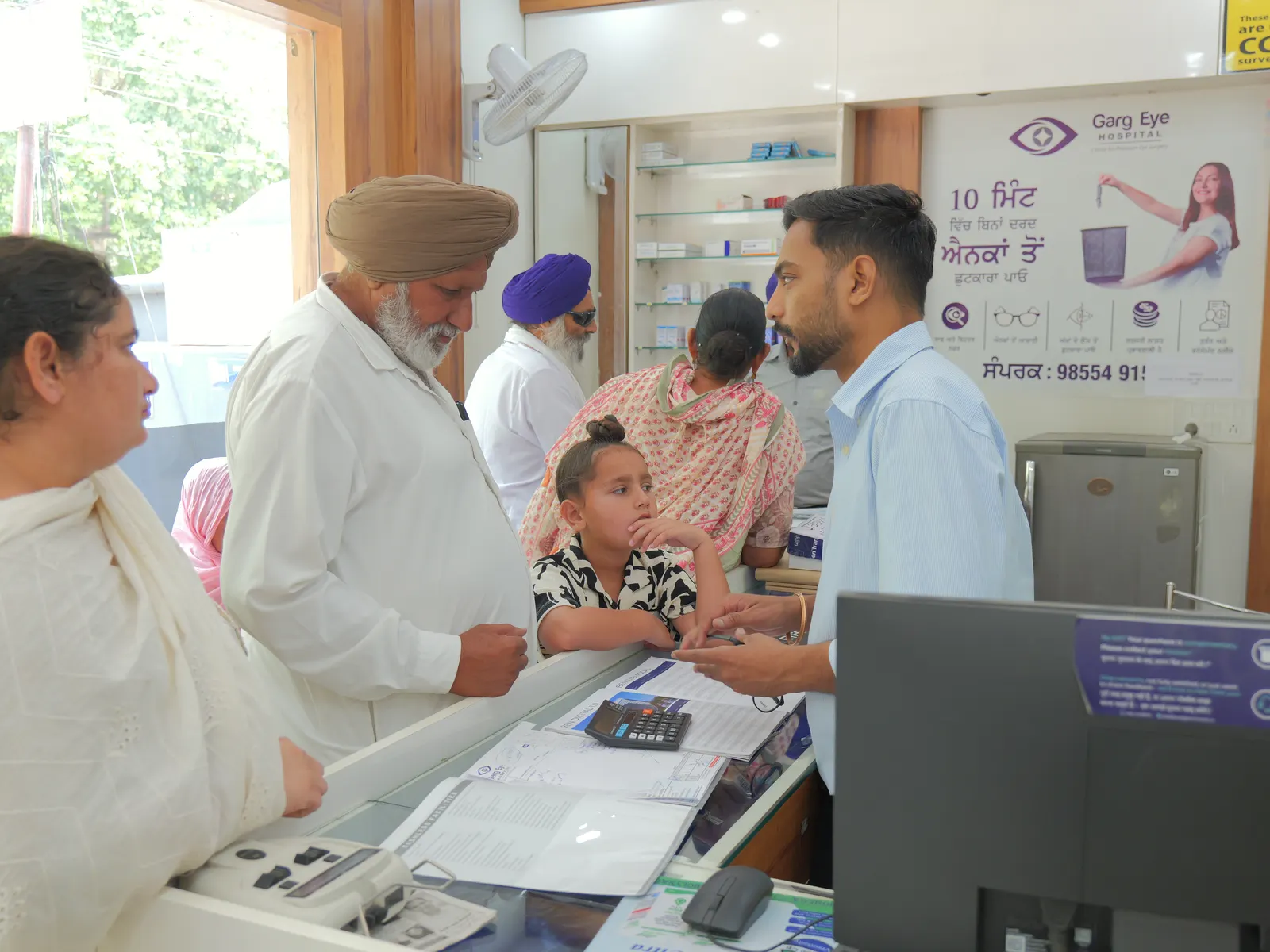
Three things help you get glasses that work. Ask for the prescription on paper, including the "add" number if you are over 40. Ask whether the lens coating suits your screen use. And return for a check if the glasses give you a headache after a week, because a small error in the measurement can cause that.
What about medicines and the eye pharmacy?
The hospital has an eye pharmacy under the same roof. After the doctor prescribes drops or ointment, you can collect them before you leave. Eye drops need care. Wash your hands first, do not touch the dropper to your eye, and keep the bottle closed. Most bottles should be discarded a month after opening unless the label says otherwise, even if some liquid is left. If you use more than one drop, wait about five minutes between them so the first is not washed out.
What is it like inside the clinic?
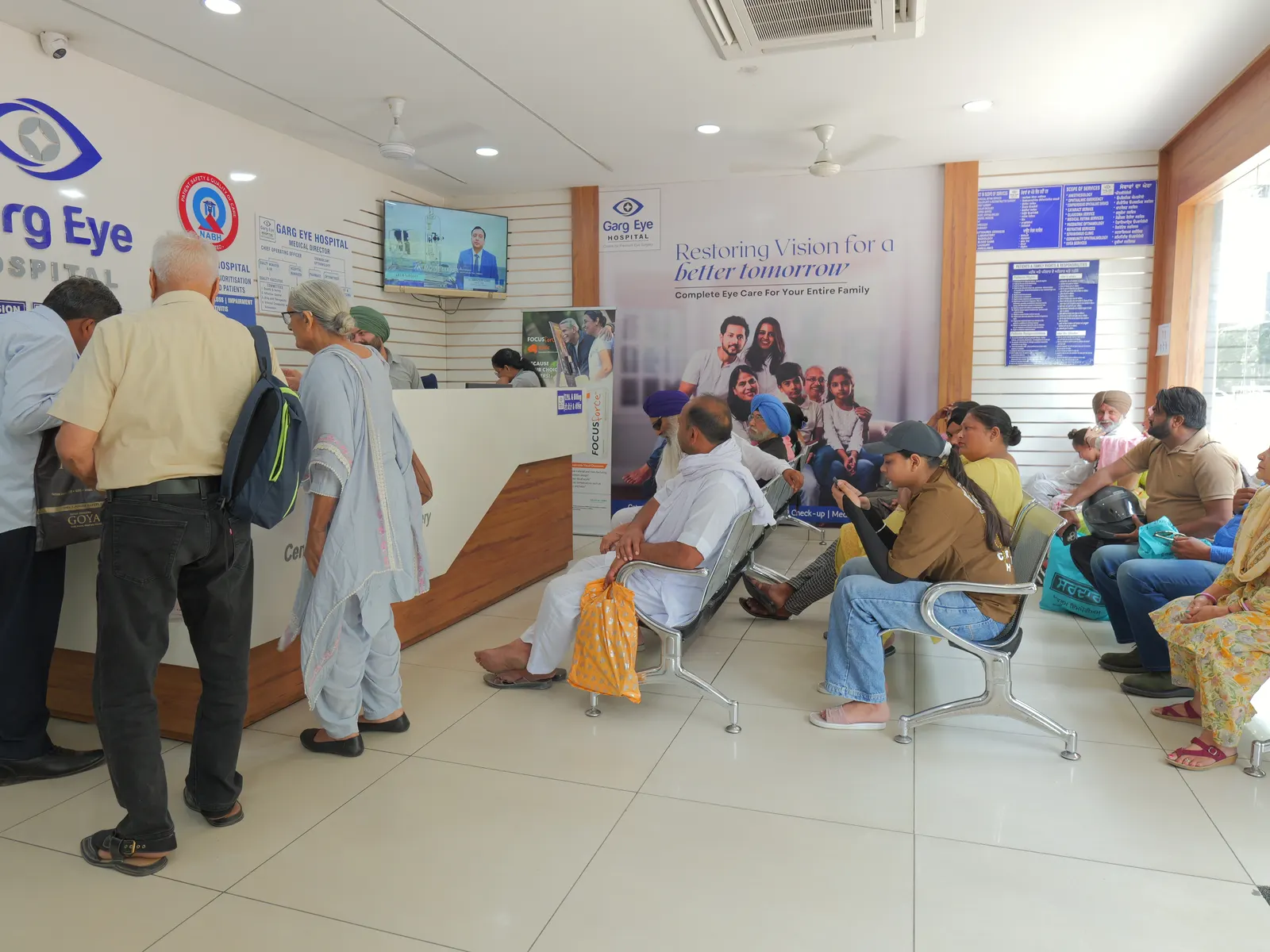
Patients wait on seats in a hall beside the reception desk, and the consultation rooms have the equipment set up for the examination. Reviews on Google mention the same things again and again: the staff are cooperative, the place is clean and quiet, and waiting is reasonable. One reviewer wrote that the clinic is "clean, modern, and well-organized, with very little waiting time." Another wrote, "Waiting Area and infact the whole Hospital is pretty Clean and Quiet." More on the patient reviews page.
How does a first visit to the clinic work, from start to finish?
- Call or book online. Give your name, phone and the problem. The desk suggests an OPD day and time.
- Arrive and register. Bring old glasses, earlier reports, your medicine list and your sugar or BP readings. Bring your insurance card if you plan to use it.
- Tests. Vision, pressure and the slit lamp come first. The staff guide you from room to room.
- Drops and wait. If the doctor needs to see the retina, you wait 20 to 30 minutes after the drops.
- Consultation. Dr. Amandeep Garg explains what he found, what it means and what your options are.
- Prescription, medicines and glasses. You collect medicines at the pharmacy and, if needed, order glasses at the optical shop.
- Review. The doctor tells you when to come back. If surgery is advised, the desk explains the date, the cost and your insurance position.
What does a clinic visit cost?
The desk quotes the consultation fee when you call, and extra tests are added only when the doctor advises them. Because the fee and test charges can change, the desk is the source for the current figure. Treatment costs for surgery depend on the condition and the lens or laser used. See cost of eye treatment in Patiala for public price ranges.
Health insurance usually pays when you are admitted for treatment that is medically needed, such as cataract surgery. It usually does not pay for an OPD consultation or for glasses. The hospital works with many insurers, TPAs and government schemes, including ECHS, Ayushman Bharat, SGPC and the Bhai Ghanhya Sehat Sewa Scheme. Read insurance and empanelments for the details.
How can you protect your eyes between clinic visits?
Most daily eye strain comes from habits, not disease. These steps cost nothing.
- Rest from screens. Every 20 minutes, look at something 6 metres away for 20 seconds. Blink fully, because we blink less when we stare at a screen.
- Light and distance. Read in good light and hold the phone at about arm's length rather than close to the face.
- Sunglasses. Wear a pair that blocks ultraviolet light when you ride or walk in strong sun. UV exposure adds to cataract risk over the years.
- Control sugar and blood pressure. Both damage the small blood vessels of the retina.
- Do not smoke. Smoking raises the risk of cataract and macular disease.
- Do not rub your eyes. Rubbing can hurt the cornea, and in some people it makes the cornea shape worse.
- Wash hands before touching your eyes, and do not share towels, kajal or eye drops.
What mistakes do people make with eye drops and home remedies?
Three mistakes cause real harm. The first is buying steroid drops from a chemist for a red eye without a prescription. Steroid drops can raise eye pressure and bring on cataract if used for weeks, and they can make some infections worse. The second is using an old bottle of someone else's drops. Different red eyes need different drops, and only an examination tells which. The third is putting home remedies such as ghee, rose water or breast milk into the eye. These can bring in germs, and a corneal infection can scar the eye in days. If your eye is red, painful, sticky or sensitive to light, get it examined rather than guessing.
How do children and seniors use the clinic?
Children. A child cannot say "my eye is weak". Signs to watch for are tilting the head, sitting close to the screen, rubbing the eyes, an eye that turns in or out, and falling grades. Lazy eye responds well when found before the early school years. The hospital treats children's eye care, lazy eye and squint. Read lazy eye treatment and squint treatment.
Seniors. Cataract, glaucoma and macular change are common after 60. Bring a family member for the visit, because the pupil drops blur near vision for a few hours and the doctor's advice is easier to follow with two people listening. Ask for the plan in writing if you want to read it later.
Which towns do patients come from?
People travel to the clinic from Nabha, Rajpura, Samana, Sirhind-Fatehgarh Sahib, Sangrur, Khanna and Malerkotla. Most check-ups need one visit, and the tests are done in order on the same day to save a second trip.
Sangrur is about 1.5 hours by road. Khanna and Malerkotla take 1 to 1.5 hours each. Call before you leave if you are coming a long way, so the desk can plan your tests in one visit.
How do you reach the clinic and when is it open?
The OPD is open Monday to Saturday, 9 AM to 5 PM. The address, the map button and the phone number are in the contact block at the end of this page. The OPD timings page explains the right time of day to come and what to bring. To book without calling, use the online booking page.
Which pages should you read next?
- Eye specialist in Patiala: meet Dr. Amandeep Garg.
- About Garg Eye Hospital: the story since 2016.
- Eye checkup in Patiala: what a full check covers.
- Best eye treatments in Patiala: every treatment in one place.
- Eye hospital FAQ: more questions answered.
- Contact the hospital: phone, email and map.
Frequently asked questions about the eye clinic in Patiala
Is there an eye clinic in Patiala open six days a week?
Yes. The OPD at Garg Eye Hospital is open Monday to Saturday, 9 AM to 5 PM. Call +91 98554-91500 to book a time.
Do I need an appointment, or can I walk in?
You can book by phone or online, which is the better choice because it saves waiting. If you walk in, tell the desk your problem so the right tests are lined up first.
How long does an eye check-up take?
A basic test takes less time, but a full check with pupil drops takes a few hours because the drops need 20 to 30 minutes to work and each test is done in order. Plan for half a day.
Can I drive after the check-up?
Not if you had pupil drops. Near vision stays blurred and light feels bright for a few hours. Come with someone or arrange a ride.
What should I bring to the eye clinic?
Old glasses, earlier eye reports, a list of your medicines, your sugar and blood pressure readings, and your insurance card or ID if you plan to use cover.
Is the eye test the same as at an optical shop?
No. A shop measures your glasses number. The clinic also measures eye pressure, examines the front and back of the eye and checks for disease. A normal glasses number can hide glaucoma, diabetic changes or early cataract.
Does the clinic also make glasses?
An optical shop is in the same building. You may take your prescription anywhere you like.
How often should children get their eyes checked?
Once before school, then every 1 to 2 years, or sooner if the child squints, tilts the head, rubs the eyes or sits close to the screen.
I have diabetes. Do I need a retina check every year?
Yes, every year, even if your sight is clear. Early diabetic eye disease has no symptoms, and a dilated retina examination finds it in time.
Can the clinic tell me if I can remove my glasses with LASIK?
Yes. Corneal mapping, corneal thickness and a stable power for at least a year are checked first. If LASIK is not safe for your eyes, ICL or another option may be suggested.
Is surgery advised at every visit?
No. Most clinic visits end with advice, drops or glasses. Surgery is advised only when the examination shows it is needed.
Is an eye check-up covered by insurance?
An OPD check-up is usually not claimable. Admitted treatment that is medically needed, such as cataract surgery, usually is, subject to your policy and pre-approval.
My eye is red and painful. Should I wait or come now?
Come as soon as you can during OPD hours. Do not use leftover drops, and do not wear contact lenses until the doctor has examined you. If the pain is severe or your vision drops suddenly, go to the nearest hospital emergency first.
Can a senior with a walking problem visit the clinic easily?
Tell the desk when you book, and bring a family member. The staff will guide you from test to test.
Is there a cheaper way to get a check-up if I use a government scheme?
The hospital works with ECHS, Ayushman Bharat, SGPC and the Bhai Ghanhya Sehat Sewa Scheme for admitted treatment. Ask the desk what applies to your card and your problem before you come.
Contact Garg Eye Hospital, Patiala
Passey Road, Near Gurudwara Dukh Niwaran Sahib, Patiala, Punjab 147001
Phone: +91 98554-91500
Email: gargeyehosp@gmail.com
OPD: Monday to Saturday, 9 AM to 5 PM
Open the map