
Book an Eye Appointment in Patiala at Garg Eye Hospital
Book an eye appointment at Garg Eye Hospital in Patiala by filling the short form below or by calling +91 98554-91500. The desk calls you back during OPD hours, Monday to Saturday, 9 AM to 5 PM, with a time for your visit.
Quick answer
To book an eye appointment in Patiala, fill the form on this page or call +91 98554-91500. Garg Eye Hospital, open since 2016, sees patients in the OPD Monday to Saturday, 9 AM to 5 PM. Dr. Amandeep Garg, MBBS, DNB, a phaco and LASIK surgeon, leads the care for cataract, LASIK, ICL, glaucoma and retina problems. Patients rate the hospital 5.0 on Google from more than 1,500 reviews. Cashless treatment is available with many insurers and schemes. The desk calls you back with a time.
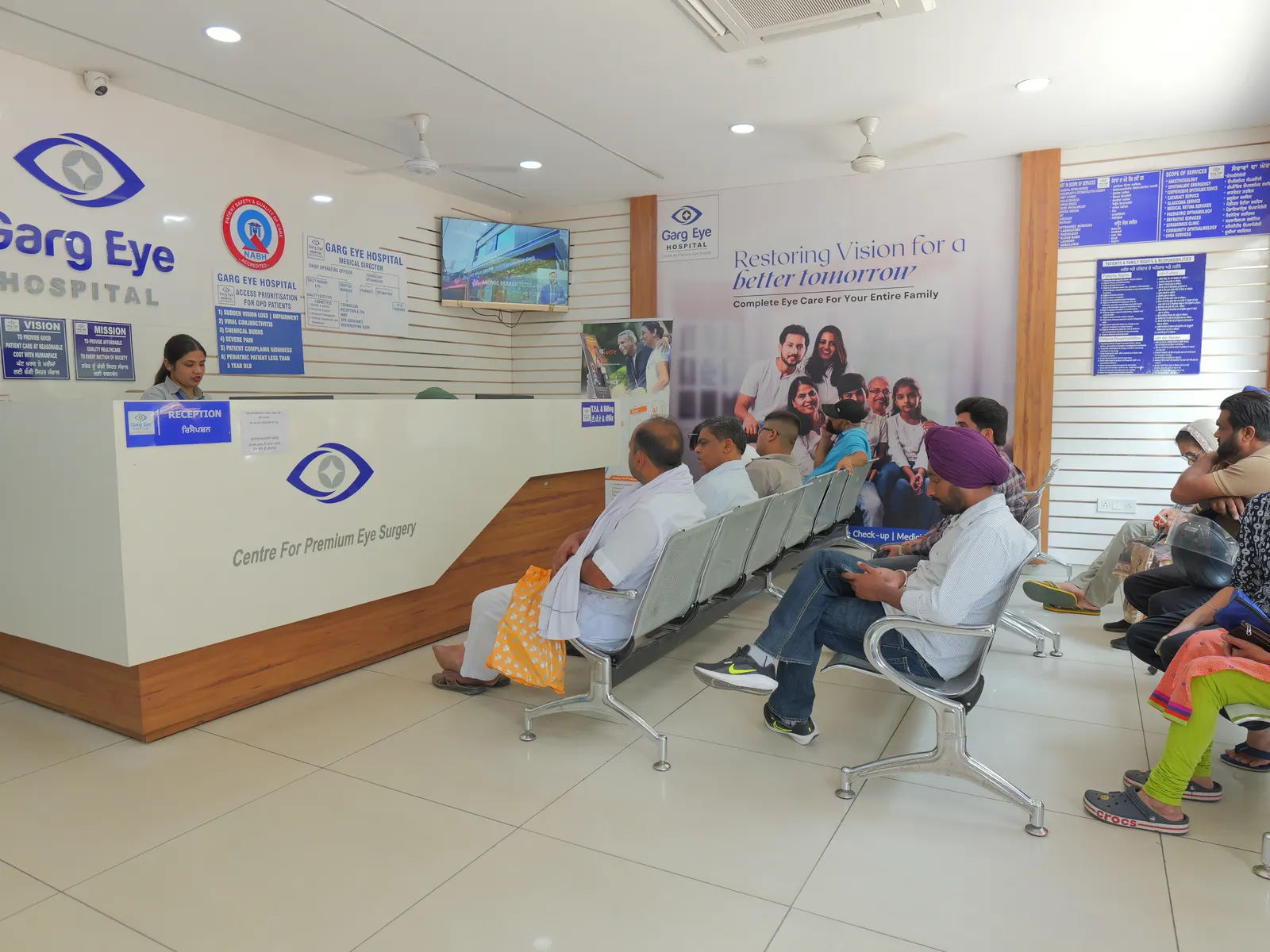
How do you book an eye appointment in Patiala?
You have three ways to book. All three reach the same desk.
| Way to book | How it works | Best for |
|---|---|---|
| The form on this page | Send your name, phone and problem. The desk calls you back during OPD hours with a time. | Booking late at night or from your phone |
| Phone | Call +91 98554-91500 from 9 AM to 5 PM, Monday to Saturday. | Same-week visits and questions |
| Walk-in | Come to the reception desk during OPD hours and tell the desk your problem. | Short, simple check-ups |
A booked slot saves waiting, because the desk plans the tests in order before you arrive. Walk-ins are seen too, but the wait depends on the day.
What happens after you send the form?
- 1You send the formName, phone and problem
- 2The desk calls youDuring OPD hours, Monday to Saturday
- 3You agree a timeA day and time that suit you
- 4You get your checklistWhat to bring and what to expect
- 5You visitTests, consultation, advice
You do not pay anything to send the form. The desk uses your phone number only to call you about the visit. If you do not hear back by the next OPD day, call +91 98554-91500.
What should you tell the desk when you book?
Three details help the desk plan your visit.
- The problem in your own words. Blur, pain, redness, a child who squints, a wish to remove glasses, a diabetic check. You do not need a medical name.
- Whether you plan to use insurance or a scheme. The desk will tell you what to carry and whether pre-approval is needed.
- Whether anyone will come with you. If you will have pupil drops or you are a senior, a family member is a good idea.
Which appointment do you need?
| If this is you | Choose in the form | What the visit usually covers |
|---|---|---|
| Blur, headache, tired eyes, new glasses | Eye check-up | Vision test, pressure, slit lamp and dilated retina check |
| Diagnosed or suspected cataract | Cataract | Examination, lens power tests and a surgery plan |
| Want to remove your glasses | LASIK or ICL | Corneal mapping and a suitability talk |
| Family history of high eye pressure, or past 40 | Glaucoma | Pressure test and optic nerve check |
| Diabetes, or sudden floaters or flashes | Retina or diabetic eyes | Dilated retina examination and OCT where needed |
| A child with an eye that turns or tilts | Child or squint | Child-friendly eye examination and a treatment plan |
| Advised surgery elsewhere and want another view | Second opinion | A fresh examination and an honest explanation |
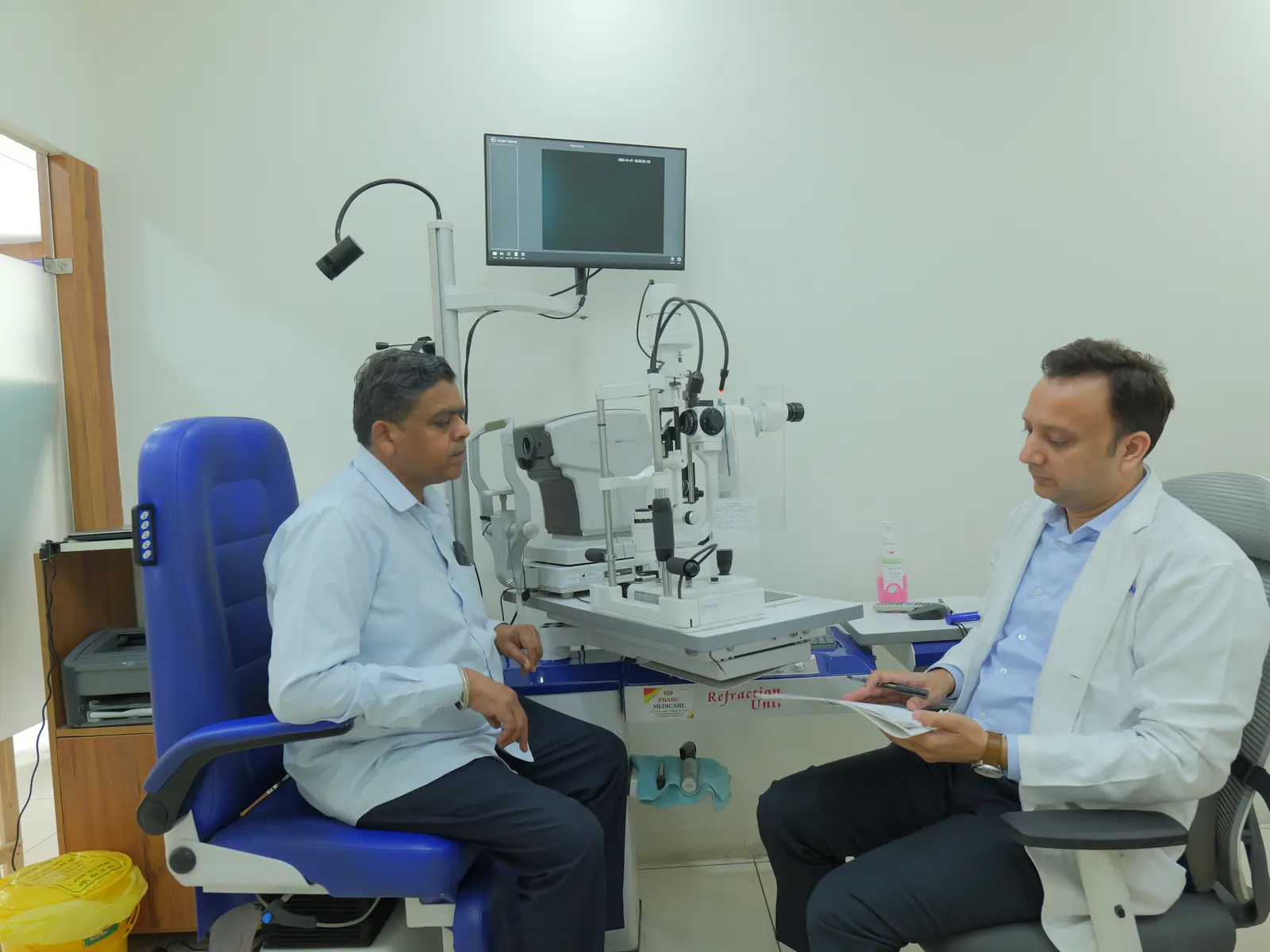
How should you prepare for each kind of visit?
The best preparation depends on why you are coming. These notes cover the common visits.
A general eye check or new glasses
Bring your old glasses and wear them to the clinic. If you use a phone or laptop for work, tell the desk, because screen strain changes what the doctor looks for. Eat normally, since the visit takes a few hours.
A cataract (motiyabind) check
Bring any earlier reports and a list of your medicines. Tell the desk if you take blood thinners or have diabetes, high blood pressure or a heart condition. The doctor needs this to plan surgery safely. Bring a family member, because decisions about surgery are easier when two people hear the explanation.
A LASIK or ICL evaluation
If you wear contact lenses, stop wearing soft lenses before the corneal mapping, because lenses change the shape of the cornea and can give a false reading. Ask the desk how many days you need to stay without them. Hard lens wearers usually need longer. Bring your most recent glasses prescription. The tests include corneal mapping and thickness, and the doctor decides on suitability only after them.
A glaucoma or pressure check
Bring earlier pressure readings and any reports that mention the optic nerve. Tell the desk if a close relative has glaucoma. The visit includes a pressure test and an optic nerve examination.
A retina or diabetic eye check
Bring your latest sugar reports, including HbA1c if you have one, and your medicine list. Pupil drops are part of this visit, so arrange a ride home.
A child's eye check
Choose a time when your child is rested and fed. Bring any earlier glasses and school reports about difficulty seeing the board. Tell the child it is a game of looking at pictures and lights, not a test they can fail.
A second opinion
Bring every report, scan and prescription from the first doctor, and the surgery advice in writing if you have it. The doctor will examine you afresh and explain whether the advice holds and why.
What questions should you ask during the visit?
Write these on your phone and ask them before you leave the consultation room.
- What exactly is wrong with my eye, in simple words?
- Is it urgent, or can we watch it for some months?
- What are all my options, including doing nothing?
- What are the risks and limits of the option you suggest?
- What will it cost, and is any part covered by my policy or scheme?
- When should I come back, and what should make me call before then?
A good visit ends with answers to all six. If any answer is unclear, ask again. It is your eye.
Booking for a child, a senior or a person who needs help
For a child, give the child's age when you book so the desk can plan the tests. For a senior, say if the patient uses a stick or a walker, or has trouble with stairs, so that the staff can guide the patient from room to room. For a patient who cannot come alone, a family member should attend, hear the explanation and take notes.
Why do people delay booking, and what is the cost of waiting?
Most people put off an eye visit for one of four reasons. Each has a simple answer.
| What people think | What is true |
|---|---|
| "I can still see, so I am fine." | Glaucoma and diabetic eye disease do not hurt and do not blur the sight early. By the time you notice, damage may be permanent. |
| "My child will grow out of it." | Lazy eye does not go away on its own. The earlier it is treated, the better the sight in the weak eye. |
| "Surgery means a big operation." | Cataract surgery is usually a short day-care procedure under local anaesthesia. Many eye visits end with only drops or glasses. |
| "I cannot afford it." | Ask for the figure first. Many insurers and schemes are accepted for admitted treatment, and many visits cost little. |
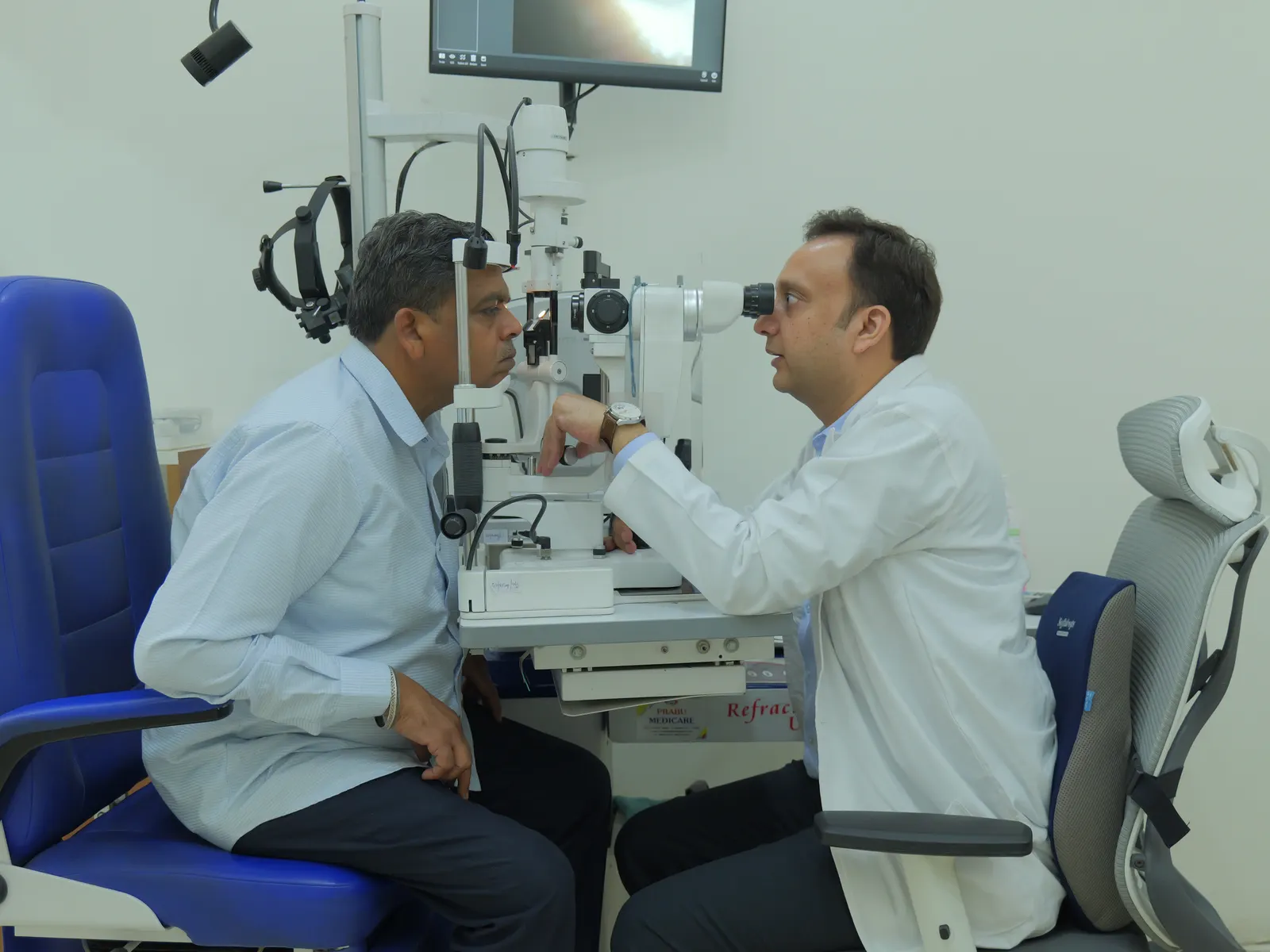
How can you plan a one-day visit from another town?
If you travel from Sangrur, Khanna, Malerkotla or further, book the first slot of the day so the tests and pupil drops fit in before the afternoon. Tell the desk how long the journey is. Bring a snack and water. Plan your return so that you travel in daylight with someone else driving, because pupil drops blur near vision. If surgery is likely, ask the desk whether the work-up can be done in the same visit so that the surgery day is your second and last trip.
How are the details you send used?
The form asks for your name, phone number, the problem and a preferred day. The desk uses them to call you back about your visit. Read the privacy policy for how information is handled. Do not send reports or photos of your eyes through the form. Bring them to the visit.
What should you bring to your appointment?
- Your current and old glasses.
- Earlier eye reports, scans or discharge papers.
- A list of your medicines, and your latest sugar and blood pressure readings.
- A photo ID, and your insurance card or scheme card if you plan to use cover.
- A family member, if you expect pupil drops or you are over 60.
If your child is the patient, bring a toy or a snack. Eye tests go better when a child is relaxed.
How long will your visit take?
A full eye check with pupil drops takes a few hours. The drops need 20 to 30 minutes to widen the pupil, and the tests are done one after the other. If you only need a glasses check, you may be done sooner. Plan your day so you can wait without rushing, and avoid booking a meeting straight after.
After the pupil drops, near vision stays blurred and light feels bright for a few hours. Do not drive yourself home. Bring sunglasses.
What does an appointment cost, and can you use insurance?
The desk quotes the consultation fee when it calls you back. Extra tests are added only if the doctor advises them. Surgery costs are quoted after the examination, because the price depends on the condition and on the lens or laser chosen. See cost of eye treatment in Patiala for public price ranges.
The hospital works with many insurers, TPAs and government schemes, including ECHS, Ayushman Bharat, SGPC and the Bhai Ghanhya Sehat Sewa Scheme. Cashless approval depends on your policy terms and needs pre-approval before admission. An OPD consultation is usually not claimable. See insurance and empanelments.
Can you book from another town?
Yes. Patients travel from Nabha, Rajpura, Samana, Sirhind-Fatehgarh Sahib, Sangrur, Khanna and Malerkotla. Tell the desk where you are coming from when you book, and the tests can be lined up in one visit so you do not need a second trip.
Sangrur is about 1.5 hours by road. Khanna and Malerkotla take 1 to 1.5 hours each.
What if you need to change or cancel?
Call +91 98554-91500 during OPD hours and tell the desk. Please call as early as you can so that the slot can be offered to another patient. If you are running late, call from the road, and the desk will tell you how the day is going.
What if you are not sure you need an appointment?
Call the desk and describe the problem in a sentence or two. The desk will tell you whether a visit is needed and how soon. For a sudden eye injury, sudden loss of sight or severe pain, go to the nearest hospital emergency department straight away and call the hospital afterwards.
Which eye problems deserve a booking this week?
Book within the week, rather than waiting for the next free day, if you notice any of these.
- Blur that is getting worse over days or weeks.
- New floaters, flashes of light or a shadow at the side of your sight.
- Double vision that did not exist before.
- An eye that is red, sore or sensitive to light for more than two days.
- Sudden trouble in one eye only, even if the other eye sees well.
- Night glare that now makes driving hard.
- A child who squints, tilts the head or complains of headaches after school.
If any of these comes on suddenly with severe pain, or you have lost sight in an instant, do not wait for a booking. Go to the nearest hospital with an emergency department.
What will a first appointment not do?
A first appointment is for finding out, not for rushing into treatment. You will not be asked to sign up for surgery on the first visit. You will not be given a price before you have been examined, because a price given before the examination is a guess. You will not be pushed towards the most expensive option. And you will not be asked to decide on the spot. You can take the advice home, talk to your family, and return when you are ready.
How can you get the earliest slot?
Call in the morning of an OPD day, or send the form the evening before. Say that you are flexible about the day. Early slots are usually easier to get than mid-afternoon ones. If a slot is full, ask the desk whether a cancellation slot can be offered, and keep your phone with you.
Who will see you?
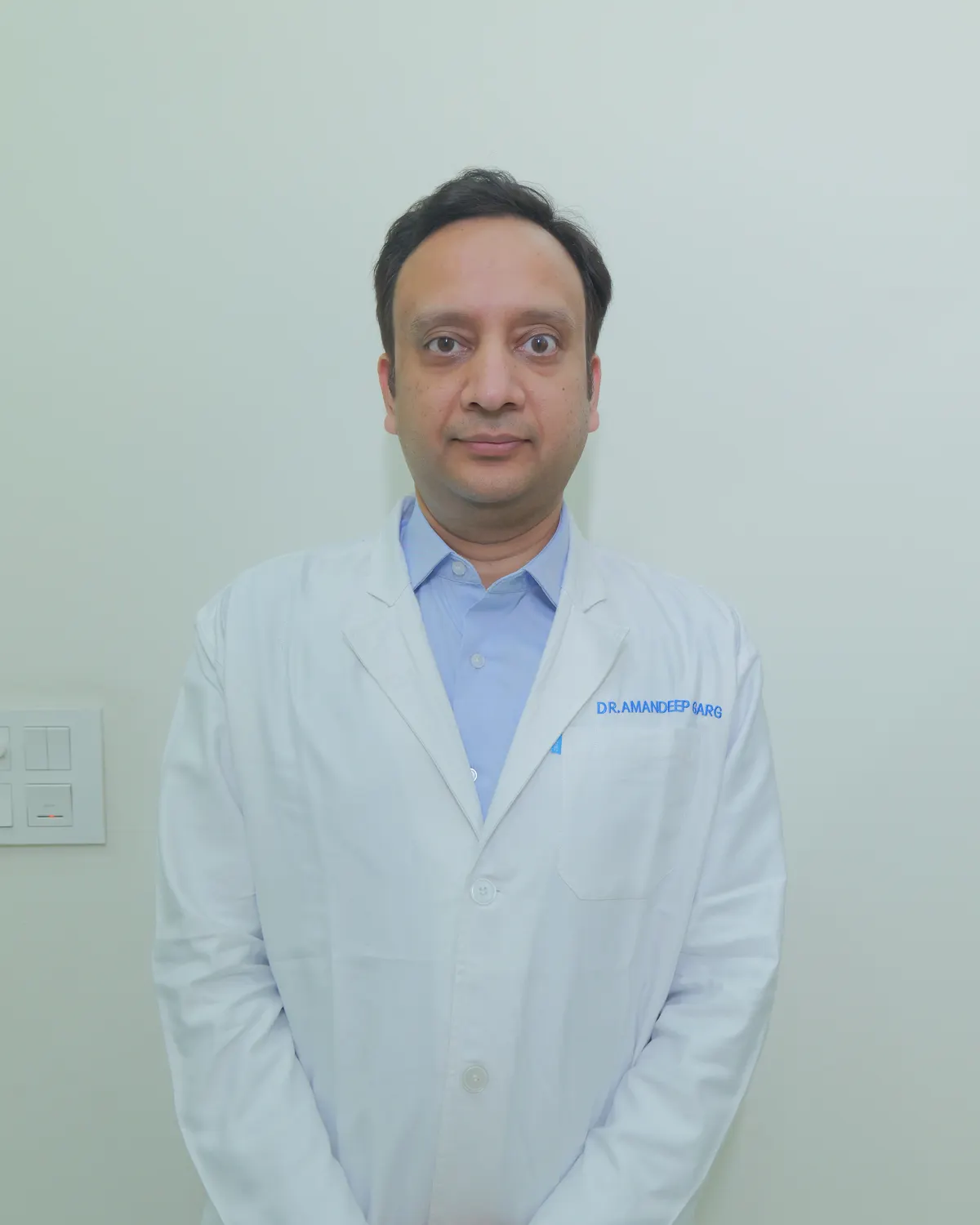
Dr. Amandeep Garg, MBBS, DNB, is the phaco and LASIK surgeon at Garg Eye Hospital. He specialises in cataract surgery and laser vision correction. Read more on the eye specialist page and the about page.
What do patients say about booking and the visit?
Patients rate the hospital 5.0 on Google from more than 1,500 reviews. Two patients described the process this way.
From the initial check-up to the procedure and post-op care, the doctors explained everything clearly and the staff was very supportive.
Appointments are well managed, waiting time is reasonable, and the overall process is smooth and efficient.
More quotes are on the patient reviews page.
Which pages help you prepare?
- OPD timings: the right time of day to come.
- Eye clinic in Patiala: what the clinic visit includes.
- Eye hospital in Patiala: all treatments in one place.
- Eye checkup in Patiala: what a full check covers.
- Contact the hospital: phone, email and map.
- Privacy policy: how your details are used.
Frequently asked questions about booking an eye appointment in Patiala
How do I book an eye appointment at Garg Eye Hospital?
Fill the form on this page or call +91 98554-91500. The desk calls you back during OPD hours with a time.
Is there a fee to book online?
No. Sending the form is free. The consultation fee is quoted by the desk when it calls.
When will the desk call me back?
During OPD hours, Monday to Saturday, 9 AM to 5 PM. If you send the form in the evening or on Sunday, expect a call on the next OPD day.
Can I choose the day and the time?
Yes. Tell the desk which day suits you, and it offers the nearest slot. Early slots are usually easier to get.
Do I need an appointment, or can I walk in?
You can do either, but an appointment saves waiting because the desk plans your tests before you arrive.
What if I need to be seen urgently?
Call +91 98554-91500 during OPD hours and say it is urgent. For a sudden injury or sudden loss of sight, go to the nearest hospital emergency first.
Can I book for my parent or child?
Yes. Give the patient's name and your phone number. A family member should come with a senior patient.
What should I bring?
Current and old glasses, earlier reports, a medicine list, sugar and blood pressure readings, a photo ID and your insurance card if you plan to use cover.
How long will the visit take?
A full check with pupil drops takes a few hours. A basic glasses check takes less time.
Can I drive after the visit?
Not if you had pupil drops. Near vision stays blurred and light feels bright for a few hours.
Can I use insurance for an OPD visit?
An OPD consultation is usually not claimable. Admitted treatment that is medically needed, such as cataract surgery, usually is.
Can I book a surgery date directly?
Surgery is planned after an examination. Book an appointment first, and the doctor fixes the date with you after the tests.
Can I get a second opinion?
Yes. Choose "Second opinion" in the form and bring your reports.
Is the clinic open on Saturdays?
Yes. OPD runs Monday to Saturday, 9 AM to 5 PM.
Is my phone number safe?
The desk uses it to call you about your visit. Read the privacy policy for details.
Contact Garg Eye Hospital, Patiala
Passey Road, Near Gurudwara Dukh Niwaran Sahib, Patiala, Punjab 147001
Phone: +91 98554-91500
Email: gargeyehosp@gmail.com
OPD: Monday to Saturday, 9 AM to 5 PM
Open the map