
Squint and Lazy Eye Treatment in Patiala: Children, Adults, Glasses, Patching and Surgery
Squint (crossed or misaligned eyes) and lazy eye (amblyopia) are two different problems that often occur together. Squint is about eye alignment. Lazy eye is about the brain not learning to see well with one eye. Garg Eye Hospital in Patiala examines children and adults for both, and Dr. Amandeep Garg, MBBS, DNB, advises glasses, patching or squint surgery based on the examination. This page explains each option, the right ages to treat, recovery and cost, in plain language.
Quick answer
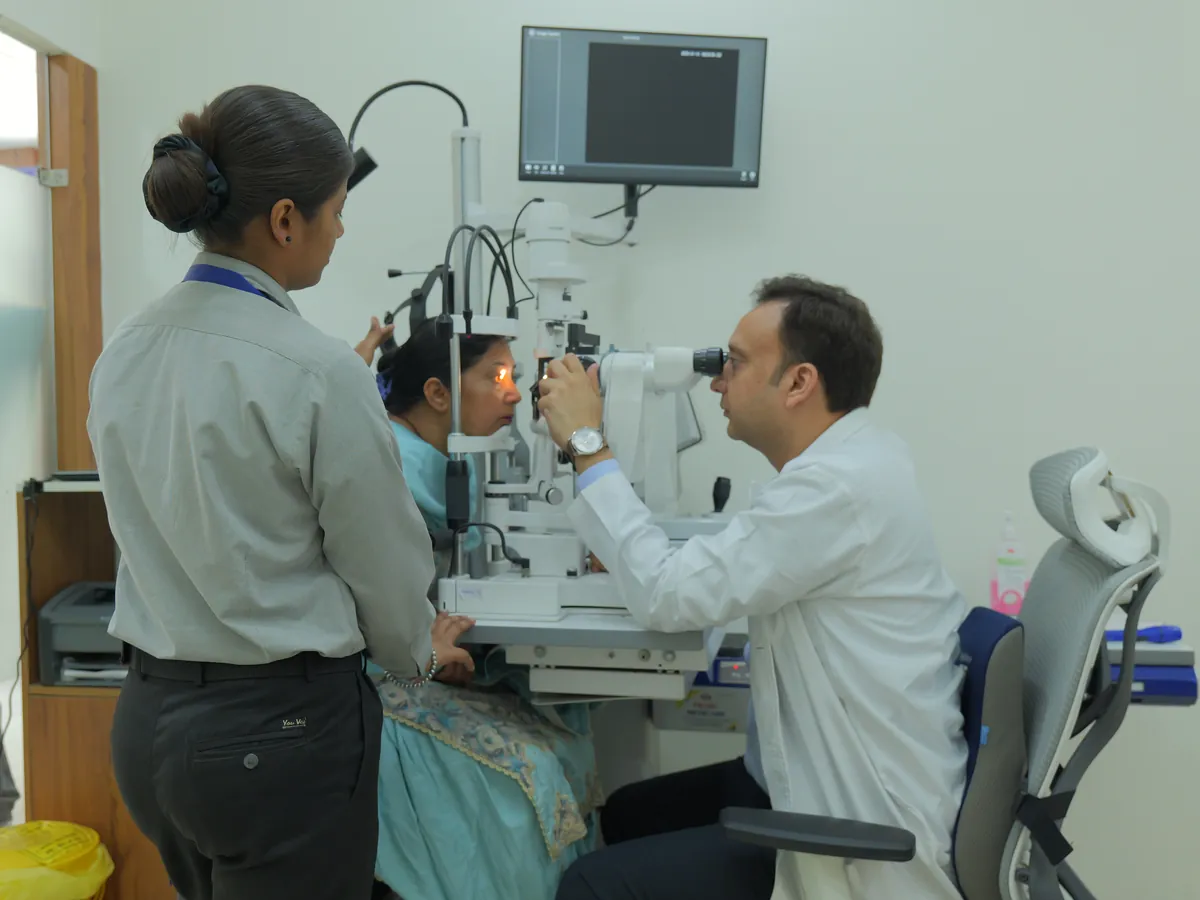
Squint is when the eyes do not point in the same direction. Lazy eye is reduced vision in one eye that the brain has stopped using. Children should be examined early, because treatment works well while vision is still developing. Treatment can include glasses, patching and, when needed, squint surgery by Dr. Amandeep Garg at Garg Eye Hospital, Patiala. Adults with squint can also be assessed. Call +91 98554-91500, Monday to Saturday, 9 AM to 5 PM.
What is the difference between squint and lazy eye?
| Point | Squint (strabismus) | Lazy eye (amblyopia) |
|---|---|---|
| What it is | The eyes point in different directions | One eye sees less than the other, even with glasses |
| What you notice | An eye turns in, out, up or down | Often nothing visible. The child may avoid covering the good eye |
| Where the problem is | Eye muscle alignment and brain control | The visual pathway in the brain |
| Can one cause the other? | Yes. A constant squint can lead to a lazy eye | Yes. A lazy eye can lead to a squint |
| Main treatment | Glasses, exercises in some types, surgery | Glasses, patching, vision training |
| Right time to treat | As early as it is found | Childhood, while vision is still developing |
A child can have squint without a lazy eye, a lazy eye without any visible squint, or both. Only an eye examination can tell which one it is.
What are the types of squint?
| Type | What happens |
|---|---|
| Esotropia | An eye turns inward, toward the nose |
| Exotropia | An eye turns outward, away from the nose |
| Hypertropia | An eye turns upward |
| Hypotropia | An eye turns downward |
| Constant squint | The eye is misaligned all the time |
| Intermittent squint | The eye turns only at times, such as when tired, ill or looking far away |
| Accommodative squint | The eye turns inward when a child with high farsightedness focuses |
| Paralytic squint | A nerve or muscle problem limits eye movement, often in adults |
| Pseudo squint | The eyes look crossed because of a wide nose bridge, but are straight |
Babies often have a wandering eye in the first few months. If the turn continues after about four to six months, or is constant, get an eye check.
What are the signs of squint and lazy eye in a child?
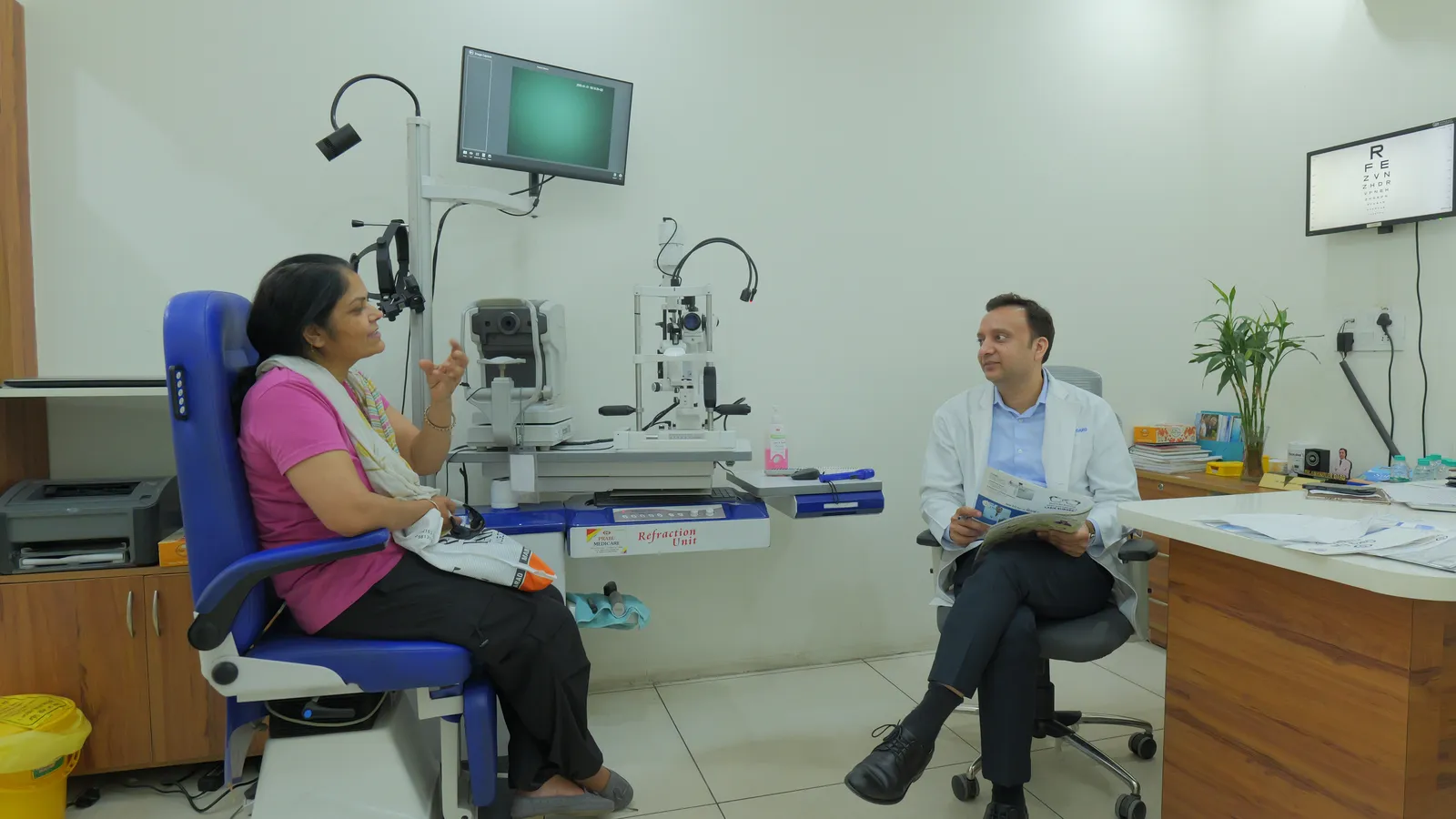
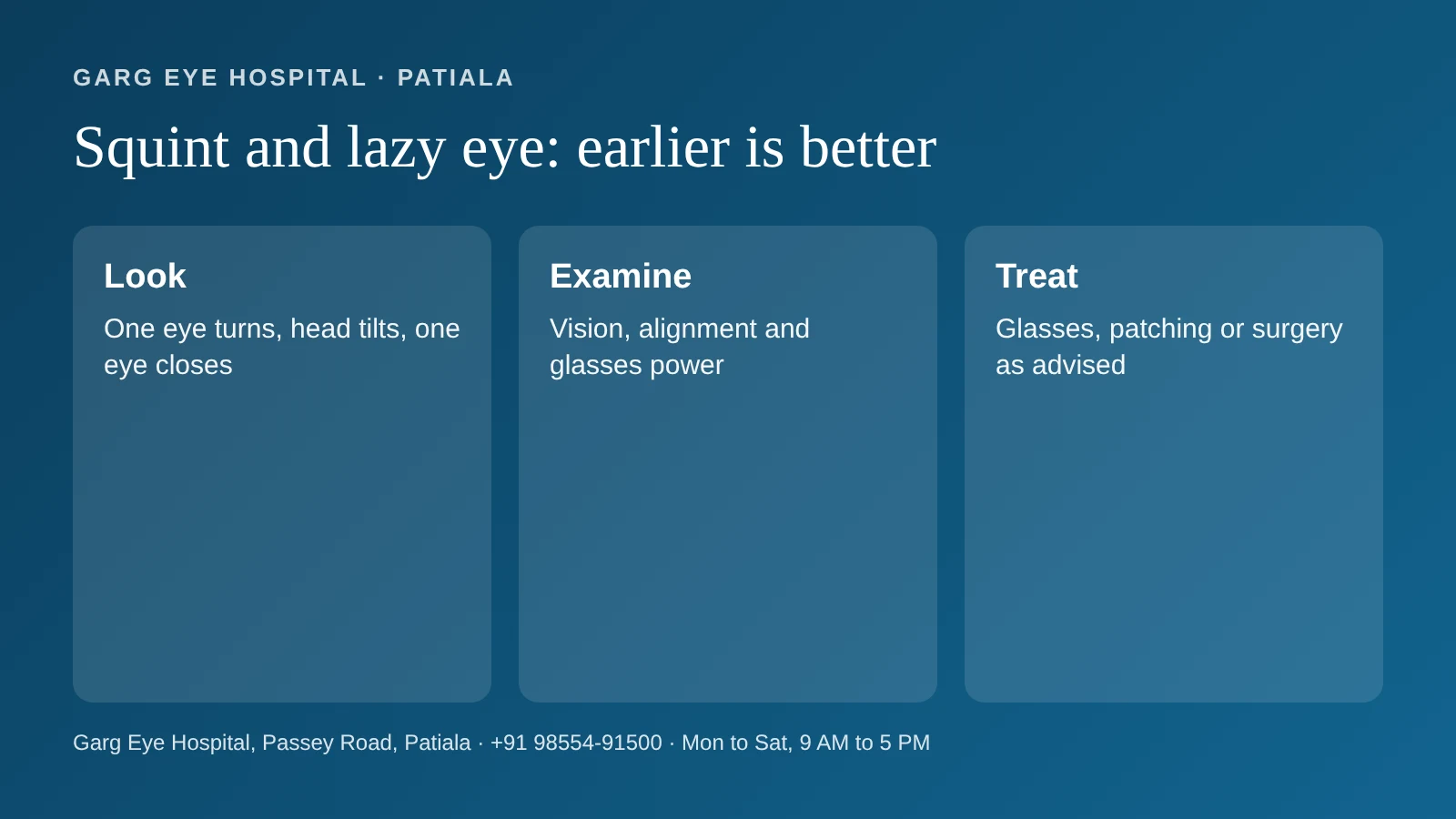
- One eye turns in, out, up or down, even for short periods.
- The child tilts or turns the head to look at things.
- The child closes or covers one eye in bright light.
- The child bumps into objects or has poor depth perception.
- Photos show the eyes pointing in different directions.
- The child sits very close to the TV or holds books near the face.
- The child rubs the eyes often or complains of headaches.
- A school vision screening shows a difference between the two eyes.
A child with lazy eye may show no sign. This is why a routine eye check in early childhood matters, even when the eyes look straight.
Hindi mein lakshan: bachche ki aankh mein bhainga kab dikhta hai?
अगर बच्चे की एक आँख अंदर या बाहर की तरफ मुड़ती है, वह सिर टेढ़ा करके देखता है, एक आँख बंद करता है या टीवी बहुत पास से देखता है, तो आँखों की जाँच करवाएँ। भैंगापन और आलसी आँख (lazy eye) की जाँच जितनी जल्दी हो, इलाज उतना बेहतर चलता है।
What causes squint?
| Cause | Example |
|---|---|
| Uncorrected refractive error | High farsightedness makes the eyes work hard and turn in |
| Family history | A parent or sibling had squint |
| Muscle or nerve imbalance | The brain does not coordinate the two eyes properly |
| Poor vision in one eye | A cataract, scar or other problem makes one eye turn |
| Premature birth or low birth weight | Higher chance of squint |
| Health conditions | Certain developmental and neurological conditions |
| Injury or illness in adults | Head injury, stroke, diabetes or thyroid eye disease can cause a new squint |
In an adult, a sudden squint with double vision needs prompt medical attention.
What causes lazy eye?
Lazy eye happens when the brain gets a blurry or misaligned picture from one eye and starts to ignore it. Common causes are:
- Squint. The brain ignores the image from the turned eye to avoid double vision.
- A big difference in power between the two eyes. One eye sees clearly and the other stays blurred.
- High power in both eyes. Both eyes stay blurry.
- Something blocking the view, such as a childhood cataract or a droopy eyelid.
If it is not treated in childhood, vision in the lazy eye may stay low, even after glasses.
Which tests does the doctor use?
The examination depends on age and cooperation. A child's check is gentle and done in steps.
| Step | Purpose |
|---|---|
| History | Family history, birth history, when the turn was first noticed |
| Vision check, as suited to the child's age | To see how well each eye sees |
| Cover test | To see which eye turns and by how much |
| Eye movement check | To look for weak or tight muscles |
| Refraction with the auto-refractometer and retinoscopy | To measure glasses power |
| Dilated examination | To check the lens, retina and optic nerve behind the pupil |
| Slit lamp examination | To check the front of the eye |
| Further checks as needed | Based on what the doctor finds |
Dilating drops can blur vision and cause light sensitivity for several hours. Bring sunglasses and a cap for your child.
What are the treatment options?
| Option | Used for | Notes |
|---|---|---|
| Glasses | Refractive error that causes squint or lazy eye | Often the first step. Some squints improve with glasses alone |
| Patching | Lazy eye | The better eye is covered for set hours to train the weaker eye |
| Atropine drops | Lazy eye, in selected cases | Blurs the better eye as an alternative to patching |
| Vision training and exercises | Selected types, such as convergence problems | Not a substitute for surgery in a large constant squint |
| Prism glasses | Some adults with double vision | Help line up images |
| Squint surgery | Misalignment that glasses and training do not fix | Muscles are repositioned so that the eyes line up better |
| Treating the cause | Cataract, ptosis, nerve problems | The underlying problem is addressed |
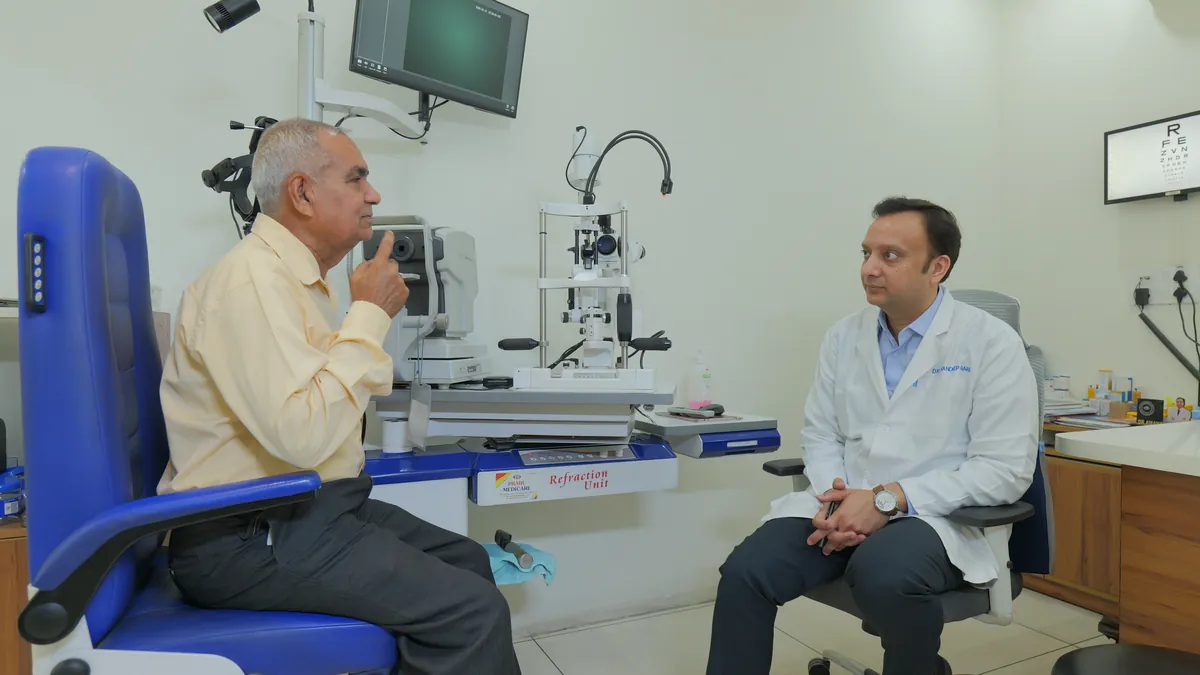
The doctor chooses the plan based on the type of squint, the child's age, vision in each eye and glasses power. Treatment is a process, and follow-up visits matter.
How does patching work for lazy eye?
Patching covers the better eye so that the brain has to use the weaker eye. It is one of the most effective ways to treat lazy eye in children. Your doctor will advise how many hours each day, and for how many weeks or months.
| Patching tip | Why it helps |
|---|---|
| Use skin friendly patches | Reduces irritation |
| Let the child do close tasks during patching | Drawing, puzzles and games make the weaker eye work |
| Make a reward chart | Children stay motivated |
| Cover the patch with stickers | Makes it fun |
| Never skip days without telling the doctor | Gaps slow progress |
| Return for scheduled checks | Vision is rechecked and the plan is adjusted |
Some children dislike patches. Tell the doctor, because there are other options such as drops.
At what age should squint and lazy eye be treated?
The earlier the better. The brain's visual system develops mostly in the first years of life. After that, the ability to improve a lazy eye reduces.
| Age | What it means for treatment |
|---|---|
| Infants | Constant squint after four to six months needs a check |
| Toddlers and preschool | The right time for glasses and patching |
| School age | Treatment still helps, often with more effort |
| Older children and teens | Some improvement is still possible, so do not delay a check |
| Adults | Squint surgery can improve alignment. Vision in a long standing lazy eye may improve less |
If your child is older and was never treated, do not assume it is too late. An examination is the way to find out what can be achieved.
When is squint surgery advised?
Surgery is considered when the eyes remain misaligned after glasses and other treatment, or when the squint is large and constant. The aim is to improve alignment and, where possible, eye teamwork. The doctor may also advise it in adults who have a squint that affects appearance, comfort or confidence.
| Situation | Surgery may be discussed |
|---|---|
| Constant large squint in a child | Yes, after glasses and assessment |
| Squint that remains after glasses | Yes |
| Intermittent exotropia that is getting worse | Yes, in selected cases |
| Adult with a long standing squint | Yes, for alignment and appearance |
| Adult with new double vision | After the cause is found and the squint is stable |
| Squint from cataract or scar | The cause is treated and then the squint is reviewed |
Surgery does not replace glasses or patching. A child may still need both afterward.
How is squint surgery done?
Squint surgery works on the muscles that move the eye. The surgeon weakens, strengthens or moves one or more muscles to change the eye's position. It is done through small openings in the surface of the eye, with no cut through the skin.
- Anaesthesia. Children usually have general anaesthesia. Adults may have local anaesthesia or general anaesthesia, depending on the case.
- Muscle surgery. The surgeon recesses (moves back), resects (shortens) or repositions the muscles as planned.
- Closing. Dissolving stitches are placed on the surface of the eye.
- Recovery. After a short observation, most patients go home the same day.
The type and number of muscles depends on the type and size of the squint. Dr. Garg will explain the plan and the likely outcome before you decide.
Is squint surgery painful?
The procedure is done under anaesthesia, so there is no pain during surgery. Afterward, the eye can feel scratchy, red and sore for a few days. Eye drops and prescribed medicines help.
Will the eyes look straight right away?
They often look straighter soon after surgery, though swelling and redness settle over days to weeks. Some patients see double briefly as the brain adjusts.
- 1First visitExamination, glasses test and a plan
- 2Glasses and patchingUsed first if suited
- 3ReviewAlignment and vision are rechecked
- 4Surgery decisionDiscussed with Dr. Garg
- 5Surgery dayDay care in most cases
- 6AftercareDrops, review visits and follow up
What is the recovery after squint surgery?
| Time | What to expect |
|---|---|
| First day | Mild discomfort, redness and watering. Rest and use drops as advised |
| First week | Redness, a scratchy feeling and sometimes mild double vision. Avoid rubbing the eye |
| Weeks 2 to 4 | Redness settles. Most children return to normal routine |
| One to two months | Alignment is rechecked. Glasses or patching may be adjusted |
| Longer term | Regular reviews until the doctor is satisfied |
Tips:
- Use the drops exactly as prescribed.
- Keep water and dirt out of the eye as advised.
- Avoid swimming and dusty places for the period the doctor suggests.
- Children can usually return to school after a short rest, as advised.
- Attend every review, because alignment and vision need monitoring.
What are the risks of squint surgery?
All surgery has risks, and your doctor will explain them for your case.
| Risk | What it means |
|---|---|
| Over or under correction | The eyes may be slightly turned in or out afterward. Another procedure can be needed |
| Double vision | Often temporary. It may need glasses with prisms or more treatment |
| Infection | Uncommon. Drops reduce the risk |
| Bleeding or swelling | Usually mild and temporary |
| Recurrence | The squint can return over time |
| Anaesthesia risks | Assessed before surgery |
| Rare serious problems | Explained during counselling |
Ask the doctor about the chance of another procedure in your case.
Can a squint come back after surgery?
Sometimes. A squint can drift over time, especially if the brain has poor control of the eye or if the child has a lazy eye. Regular follow up helps to find any change early. Some patients need a second procedure.
Can adults get squint surgery?
Yes. Adults with a squint have reasons to seek treatment, such as appearance, comfort, confidence and sometimes double vision. A long standing squint from childhood can be straightened, though vision in the weaker eye may not improve much if it was never treated. A new squint in an adult can be due to nerve, muscle, thyroid, diabetes or injury related problems, so the cause needs to be found first.
| Question | Answer |
|---|---|
| Can an adult squint be corrected? | Often the alignment can be improved |
| Will adult surgery improve vision? | Mostly alignment, and sometimes depth perception. Vision in a lazy eye may improve little |
| Is double vision a problem after surgery? | It can occur briefly. The doctor explains this in advance |
| Is it only cosmetic? | It can improve comfort and function as well as appearance |
Is lazy eye treatable in adults?
Improvement in an adult is limited compared with a child, but some adults gain vision with glasses, training and treating any underlying cause. An examination will show what is realistic for you.
Are eye exercises enough to cure squint?
Exercises can help certain problems, such as convergence insufficiency or some intermittent exotropia. They do not straighten most constant squints and should not replace glasses, patching or surgery when the doctor advises them. Be cautious of anyone who promises a cure with exercises alone.
Can squint or lazy eye be treated without surgery?
Many cases improve without surgery. Glasses can straighten an accommodative squint. Patching and drops treat lazy eye. Some adults use prism glasses for double vision. Surgery is for cases that remain misaligned after these steps.
What does a first visit for a child look like?
A first visit is planned around the child's comfort. Expect these steps, in roughly this order.
- Registration at the desk. Share your child's age, birth history and any earlier glasses or reports.
- A chat with the doctor. Dr. Garg asks when the turn was first noticed, whether it is constant or occasional, and whether anyone in the family has squint or lazy eye.
- Looking and watching. The doctor watches how the eyes move and line up while the child looks at toys, lights and targets.
- Cover test. One eye is covered gently, and the other is watched for movement. This shows the type and size of the squint.
- Glasses power. The auto-refractometer gives a first reading, and the doctor refines it with retinoscopy.
- Drops and dilated examination. The pupils are widened to check the inside of the eye. Allow extra time for the drops to work.
- Explanation and plan. The doctor explains what was found, what to try first and when to return.
Plan for about half a day if drops are needed. Bring a snack, a drink and a toy.
How long does lazy eye treatment take?
There is no single answer. Some children respond in a few months. Others need treatment for a year or more, with tapering as vision improves. The brain can slip back if treatment stops too early, so the doctor tapers it slowly. Regular review of vision in each eye guides the plan.
| Factor | Effect on treatment time |
|---|---|
| Age at start | Younger children usually respond faster |
| Cause of lazy eye | Unequal power usually responds well to glasses and patching |
| Depth of the vision loss | A larger difference may take longer to improve |
| Consistency of glasses and patching | Daily routine matters most |
| Presence of squint | May need surgery as well |
Can squint cause headaches, double vision or eye strain?
Yes. An eye that turns can make the brain receive two different pictures. Children often suppress one image, which is how lazy eye develops. Adults who develop a squint cannot suppress it as easily, so they see double. Some people with a small or intermittent squint get headaches, tired eyes and trouble reading. These symptoms deserve an eye examination, since glasses, prisms or a short course of treatment may help.
Squint and lazy eye treatment in Patiala: what people here ask
Searches include squint surgery in Patiala, squint treatment in Patiala, squint surgery cost, lazy eye treatment for adults and bhainga ka ilaj. Parents in Patiala often ask the same thing first: at what age should a child be seen.
Squint treatment in Patiala
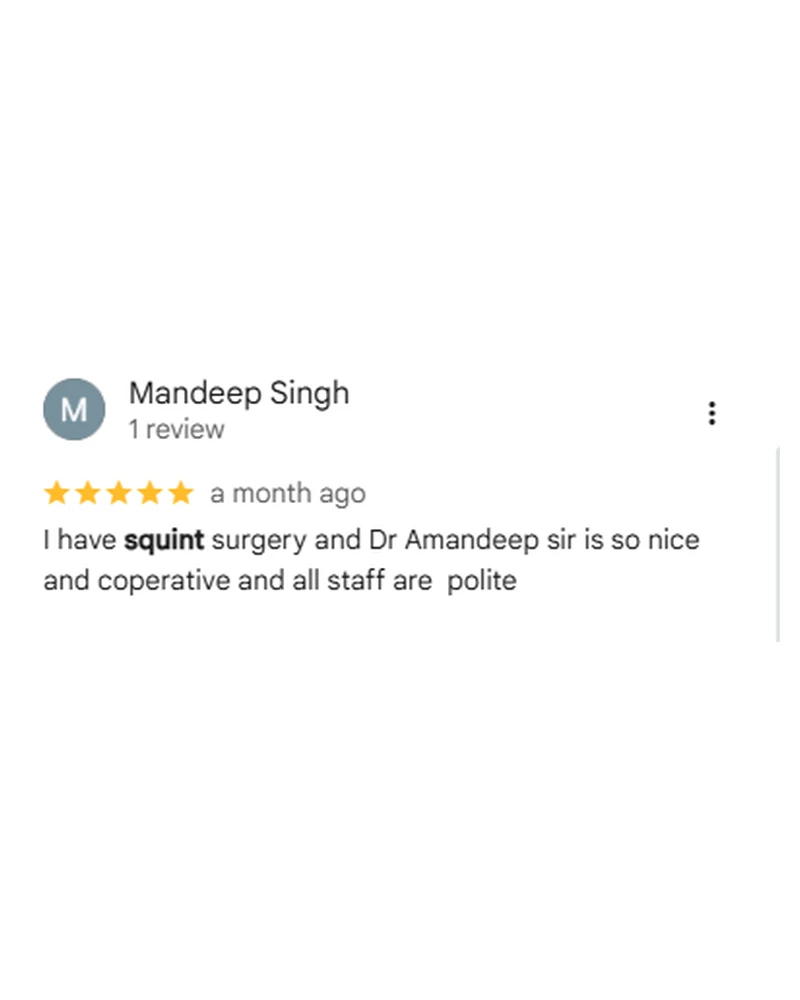
Garg Eye Hospital, Passey Road, near Gurudwara Dukh Niwaran Sahib, examines children and adults for squint and lazy eye. Dr. Amandeep Garg, MBBS, DNB, advises glasses, patching or squint surgery after the examination. A reviewer wrote on Google that she had squint surgery here and found the doctor kind and cooperative, and that the staff were polite.
Bhainga ka ilaj: kab dikhayein?
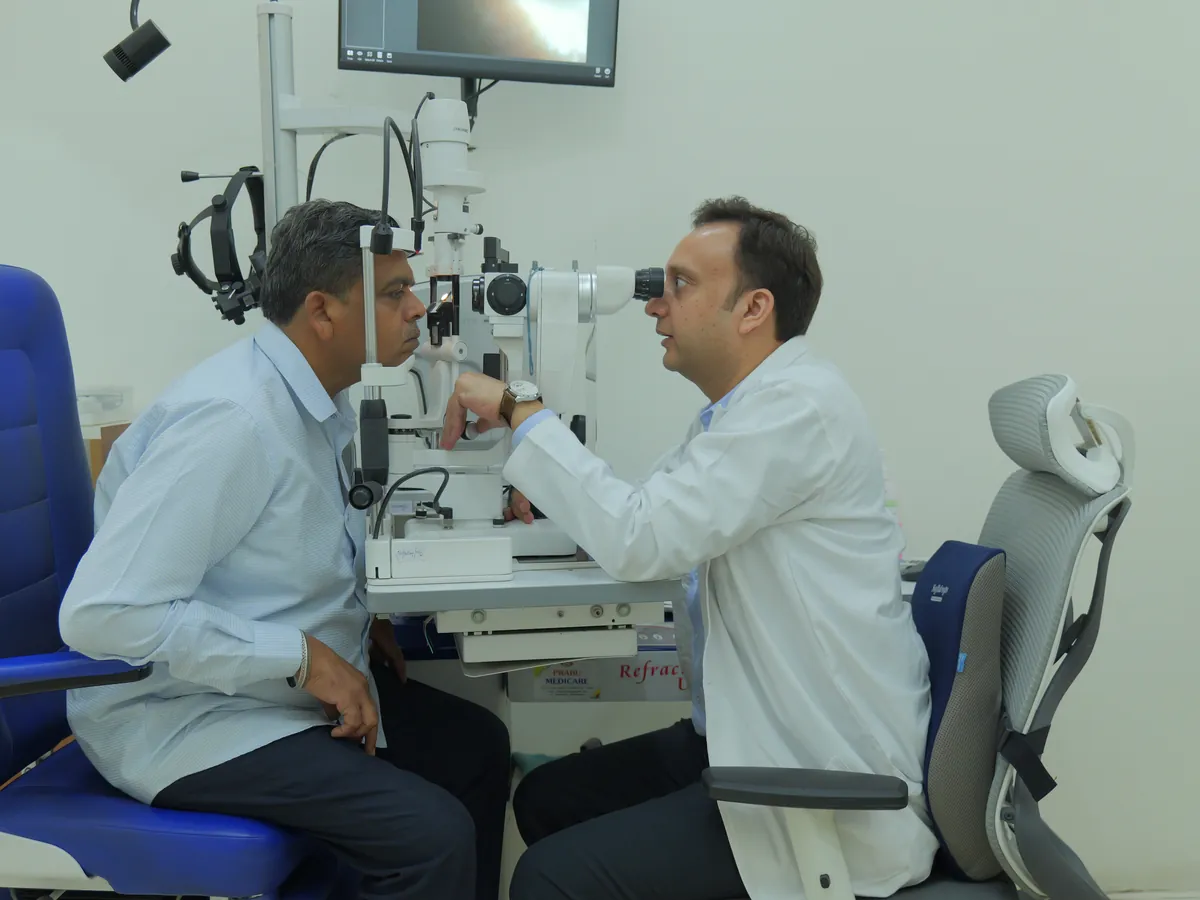
Agar bachche ki ek aankh andar ya bahar ki taraf mud rahi hai, to der na karein. Bachpan mein ilaj sabse achha kaam karta hai.
Squint surgery cost in Patiala
Public listings for squint surgery vary widely by case, so ask for an estimate after the examination. Costs depend on the number of muscles operated, the anaesthesia and the hospital. These are not hospital prices.
Lazy eye treatment for adults
Lazy eye responds most in childhood, but adults can still be examined, because some improvement may be possible and the squint itself can be treated. The doctor explains what is realistic.
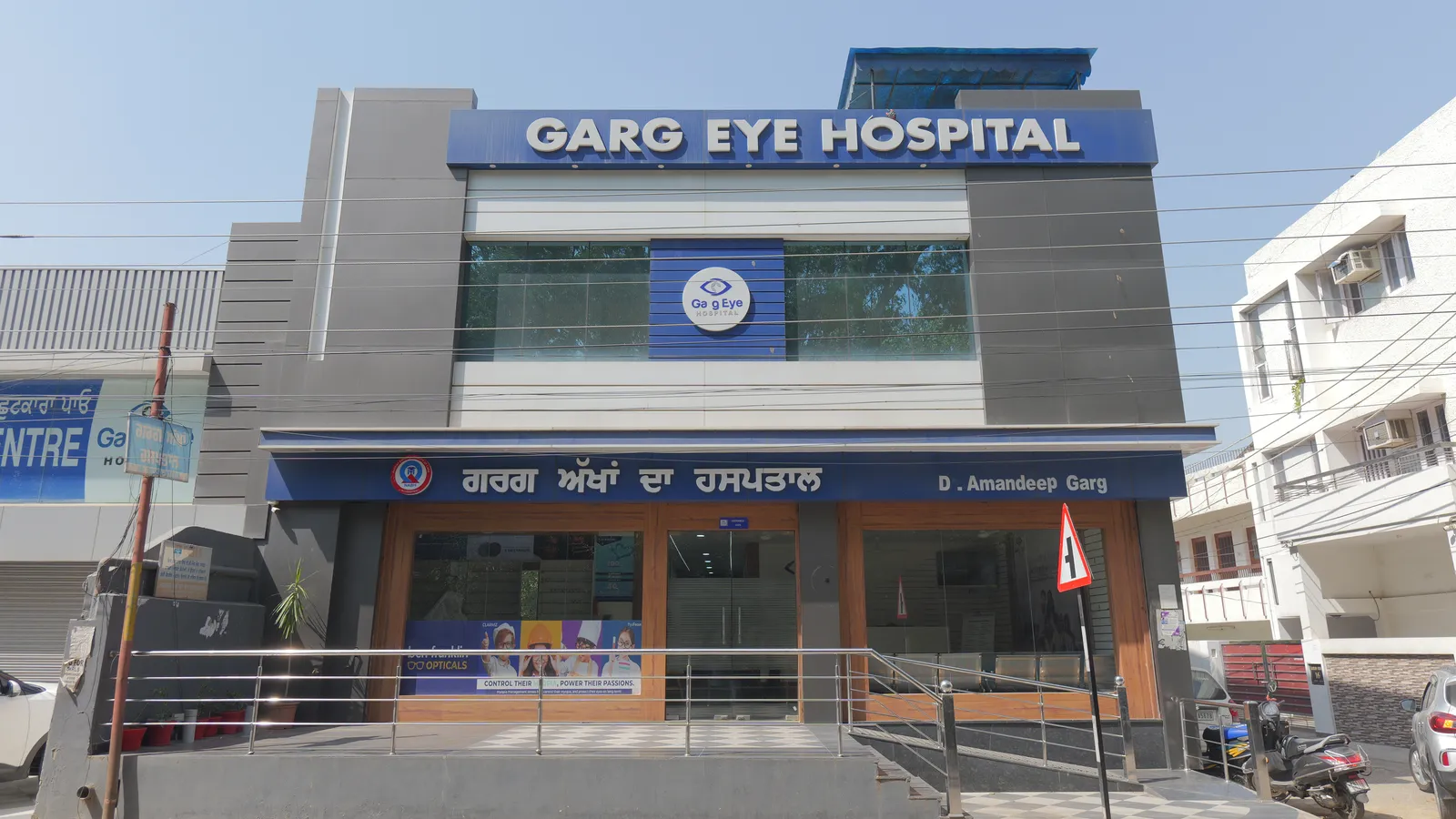
Garg Eye Hospital on Passey Road, Patiala: how to reach us for squint and lazy eye care
Garg Eye Hospital is on Passey Road, Patiala, Punjab 147001, near Gurudwara Dukh Niwaran Sahib. On Google Maps the pin sits close to the Sikh Museum, on the Passey Road and Sirhind Road side of the city. Ask for Garg Eye Hospital near Dukhniwaran Sahib and anyone nearby can point you to it.
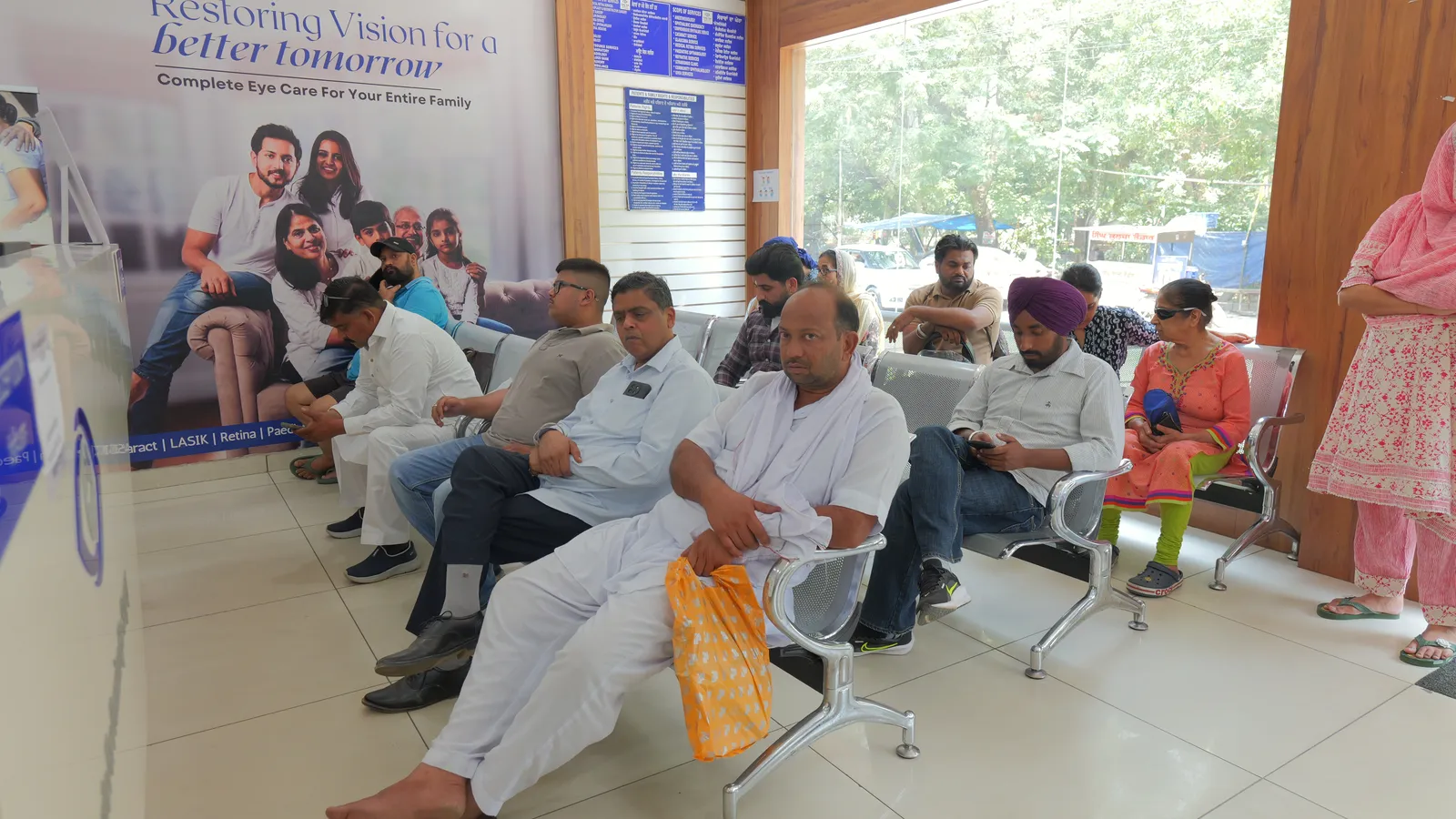
Coming from the bus stand, Leela Bhawan, Urban Estate, Tripuri, Bhadson Road or SST Nagar
Open the hospital pin on Google Maps and follow the route, or call +91 98554-91500 and the desk will guide you. OPD runs Monday to Saturday, 9 AM to 5 PM. Mornings are quieter, so a visit that starts at 9 or 10 AM usually finishes sooner.
Coming from Punjabi University, Thapar University or the Sheran Wala Gate side
Students and staff from this side of Patiala usually come between classes. Tell the desk your timetable when you book and the visit can be planned around it.
Coming from Nabha, Rajpura, Samana, Sirhind-Fatehgarh Sahib, Sangrur, Malerkotla or Khanna
Patients travel from these towns for eye care. See the pages for Nabha, Rajpura, Samana, Sirhind, Sangrur, Malerkotla and Khanna. Bring one family member, because eye drops can blur vision for a few hours after tests.
What patients wrote on Google about Garg Eye Hospital, Patiala
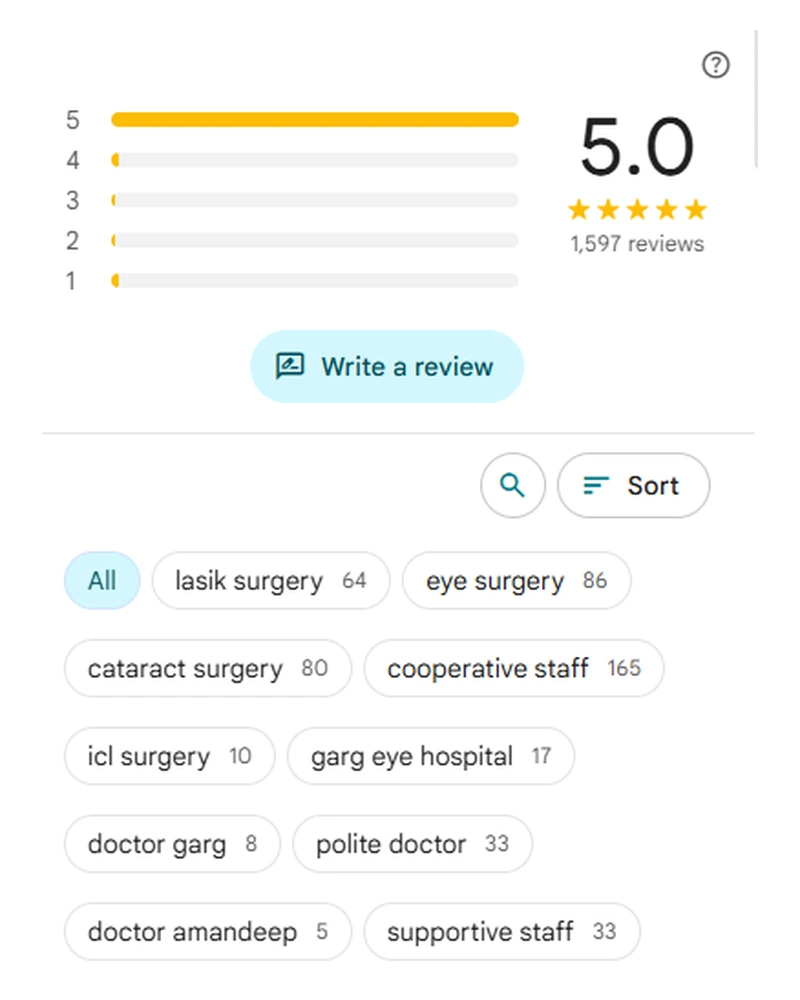
The Google listing of Garg Eye Hospital, Patiala, shows a 5.0 rating from 1,597 reviews (1,566 five star, read on 27 November 2026). These are screenshots of public reviews, shown as they appear.
Frequently asked questions about squint and lazy eye treatment in Patiala
Squint surgery in Patiala: where is it done?
At Garg Eye Hospital, Passey Road, near Gurudwara Dukh Niwaran Sahib, by Dr. Amandeep Garg, MBBS, DNB.
What is the cost of squint surgery in Patiala?
It depends on the type of squint and the number of muscles involved, so the estimate is given after the examination. Ask the desk what is included.
At what age should squint be treated?
As early as it is found. In children, treatment is most effective while vision is still developing. Adults can also be assessed.
Can squint be treated without surgery?
Some types improve with glasses, patching or exercises. Surgery is advised when the eyes stay misaligned. The doctor decides after examination.
Lazy eye treatment for adults: is it possible?
Improvement is harder after childhood, but an examination can tell what is possible. The squint can be treated separately.
What are the signs of squint in a child?
One eye turning in or out, head tilt, closing one eye, poor depth perception or bumping into things.
What is the difference between squint and lazy eye?
Squint is eye misalignment. Lazy eye is reduced vision in one eye. They can occur together.
Can squint come back after surgery?
Sometimes. Follow-up visits catch it early.
Is squint surgery painful?
Surgery is done under anaesthesia. Mild discomfort and redness for a few days are common.
How long is recovery after squint surgery?
Most people return to routine work in about a week. The doctor gives the dates for your case.
Does insurance cover squint surgery?
It may, when it is medically needed, depending on the policy. Bring your policy to the desk.
Bhainga ka ilaj kya hai?
Chashma, patching, aur zaroorat padne par operation. Pehle aankh ki jaanch hoti hai. Call: +91 98554-91500.
How do I book a squint check in Patiala?
Call +91 98554-91500, Monday to Saturday, 9 AM to 5 PM.
Contact Garg Eye Hospital, Patiala
Passey Road, Near Gurudwara Dukh Niwaran Sahib, Patiala, Punjab 147001
Phone: +91 98554-91500
Email: gargeyehosp@gmail.com
OPD: Monday to Saturday, 9 AM to 5 PM
Open the map