
Eye Specialist in Patiala: Meet Dr. Amandeep Garg, Ophthalmologist and Eye Surgeon
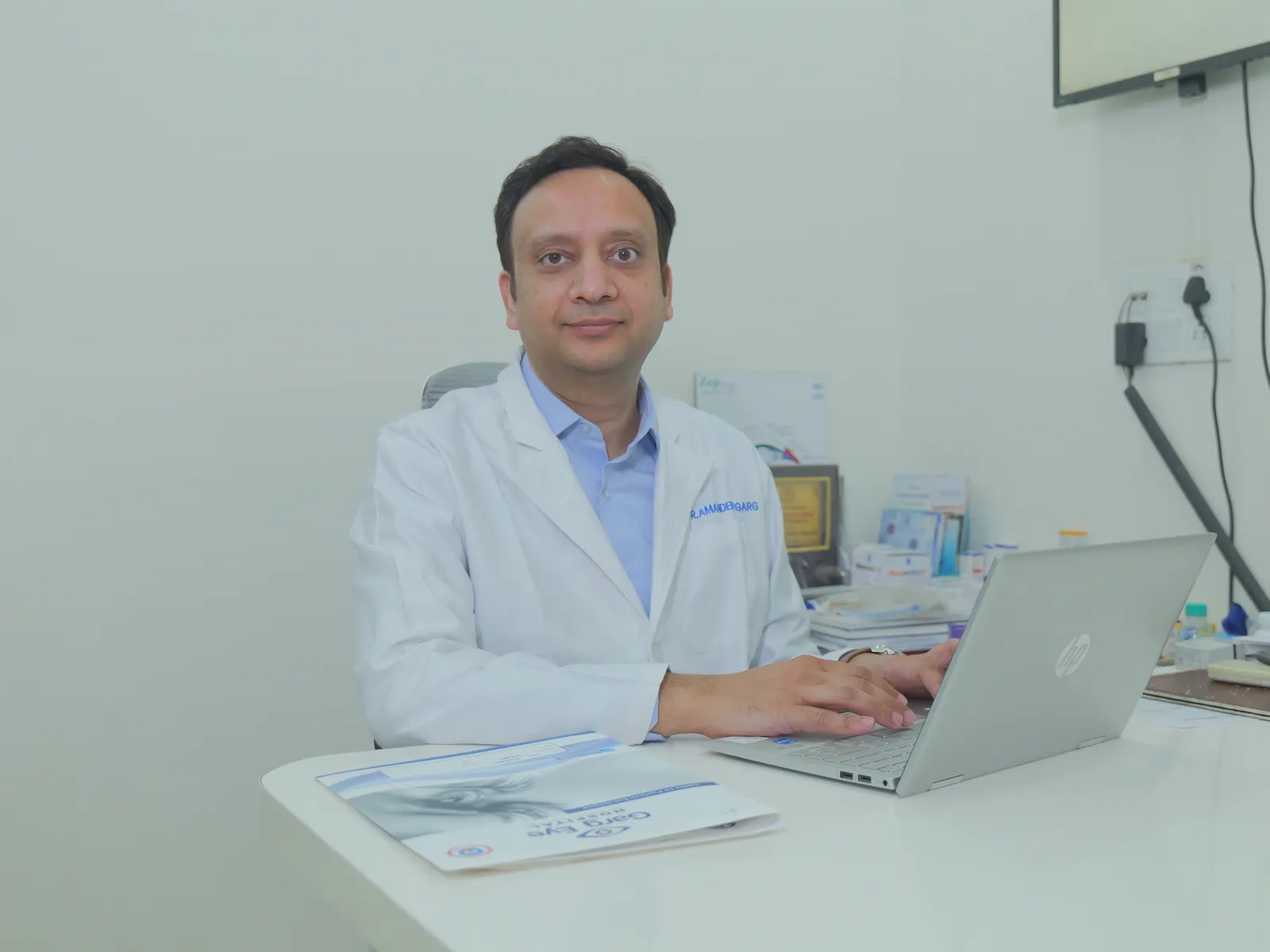
If you are looking for an eye specialist in Patiala, Dr. Amandeep Garg, MBBS, DNB, sees patients at Garg Eye Hospital from Monday to Saturday, 9 AM to 5 PM. He is a phaco and LASIK surgeon, so the doctor who examines your eyes is also the doctor who operates when you need surgery.
Quick answer
Dr. Amandeep Garg is an eye specialist (ophthalmologist) in Patiala who treats cataract (motiyabind), refractive errors with LASIK and ICL, glaucoma (kala motia), retina and diabetic eye problems. He holds MBBS and DNB degrees and operates at Garg Eye Hospital, open since 2016. Patients rate the hospital 5.0 on Google from more than 1,500 reviews. Cashless treatment is available with many insurers and schemes, subject to your policy. OPD runs Monday to Saturday, 9 AM to 5 PM. Call +91 98554-91500 to book a visit.
What is an eye specialist, and how is an ophthalmologist different?
People use three words for the person who looks after their eyes: eye specialist, ophthalmologist and eye doctor. In practice they mean the same thing. An ophthalmologist is a medical doctor (MBBS) who then completed years of postgraduate training in eye disease and eye surgery. The training ends with a degree such as MS, MD, DNB or DOMS. Only this doctor can examine the inside of the eye, diagnose disease, prescribe medicines and operate.
Two other people also work with eyes, and it helps to know the difference before you book.
| Who | Training | What they do | What they cannot do |
|---|---|---|---|
| Ophthalmologist (eye specialist) | MBBS plus postgraduate training in eye care | Diagnoses and treats eye disease, prescribes medicines, performs surgery and laser | Nothing in eye care is outside their scope |
| Optometrist | Diploma or degree in optometry | Tests vision and prescribes glasses and contact lenses | Cannot treat disease or operate |
| Optician | Training in making and fitting glasses | Makes and fits spectacles from a prescription | Cannot test for disease or prescribe treatment |
A simple rule helps. If the only problem is that you cannot read the board or your phone, an eye test and glasses may be enough. If you have pain, redness that does not settle, flashes, a shadow, sudden blur, a family history of glaucoma or diabetes, or you are over 40 and have never had a full eye check, see an eye specialist. A glasses shop cannot look at your retina or measure the pressure inside your eye.
Who is the eye specialist at Garg Eye Hospital?
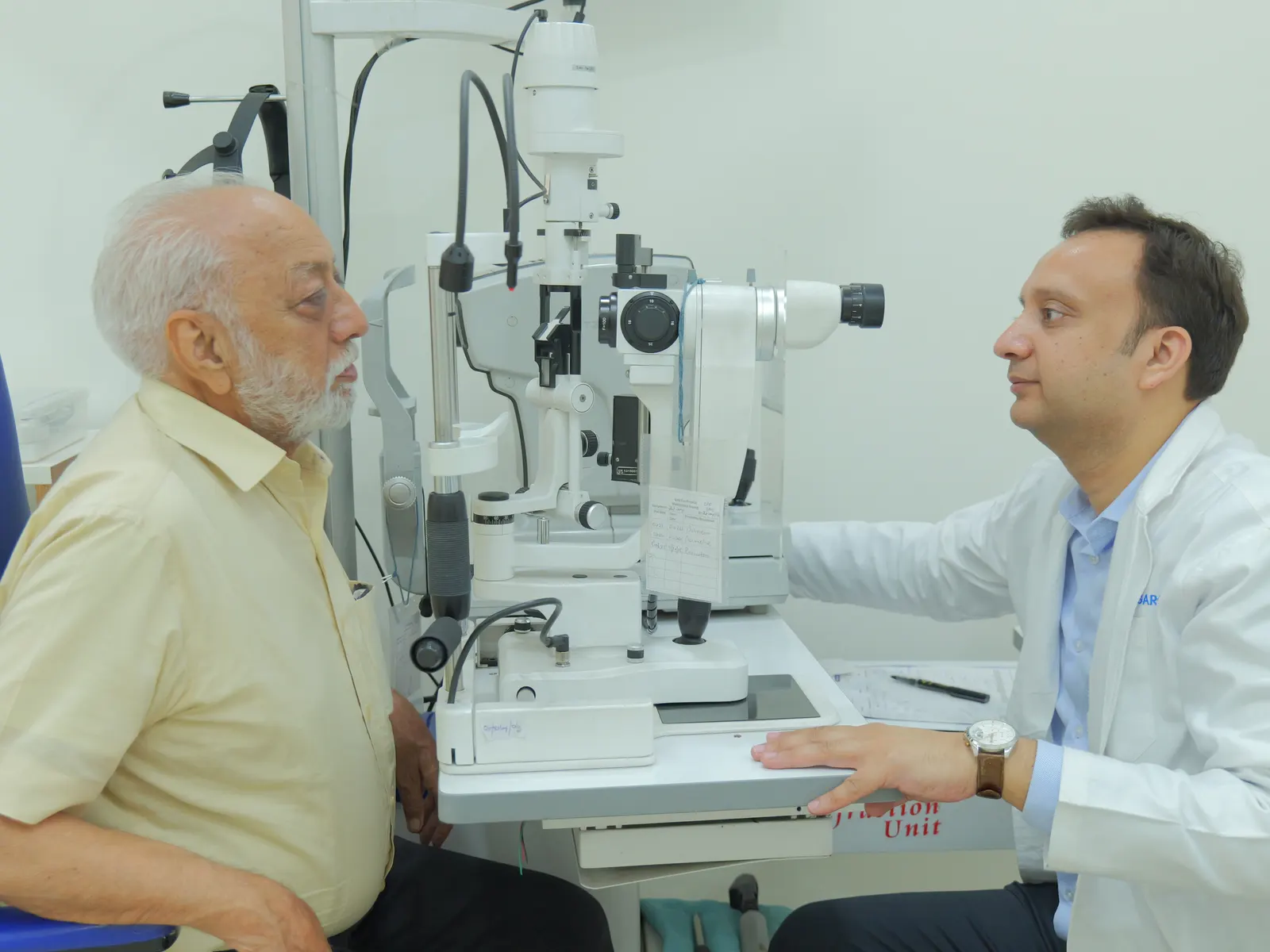
Dr. Amandeep Garg, MBBS, DNB, is the phaco and LASIK surgeon at Garg Eye Hospital. He specialises in cataract surgery and laser vision correction. His background includes an association with Sir Ganga Ram Hospital, Delhi, and a consultant role at Manipal (Columbia Asia) Hospital, Patiala. Garg Eye Hospital opened in 2016 with eye tests, laser, surgery, medicines and glasses under one roof.
| About Dr. Amandeep Garg | Detail |
|---|---|
| Name | Dr. Amandeep Garg |
| Qualifications | MBBS, DNB |
| Registration | PMC registration number 36924 |
| Surgical focus | Phaco (cataract) surgery and LASIK |
| Also treats | ICL, glaucoma, retina and diabetic eye problems, squint and eyelid conditions through the hospital team |
| Past and present roles | Association with Sir Ganga Ram Hospital, Delhi. Consultant at Manipal (Columbia Asia) Hospital, Patiala |
| Works at | Garg Eye Hospital, open since 2016 |
| OPD | Monday to Saturday, 9 AM to 5 PM |
What does an ophthalmologist in Patiala treat at Garg Eye Hospital?
Patients come with a symptom, not a diagnosis. The table below links the complaint to the condition and to the page that explains the treatment in full.
| What you notice | Condition | Where to read more |
|---|---|---|
| Foggy, dull sight, glare from headlights | Cataract (motiyabind, safed motia) | Cataract surgery in Patiala |
| Thick glasses and a wish to be free of them | Myopia, hyperopia, astigmatism | LASIK and ICL |
| Side vision shrinking, often with no pain | Glaucoma (kala motia) | Glaucoma treatment |
| Flashes, new floaters, a curtain across the sight | Retinal tear or detachment | Retina treatment |
| Blurred sight in a person with sugar | Diabetic retinopathy | Diabetic eye care |
| An eye that turns, or a child who tilts the head | Squint, lazy eye | Squint treatment |
| Drooping or turned eyelid, eyelid growths | Oculoplastic conditions | Oculoplasty |
If your complaint is not on this list, book an eye check anyway. Many eye problems look alike from the outside, and the examination is what separates them.
How does Dr. Garg examine your eyes?
A good eye examination follows a fixed order. Each step answers one question, and the doctor decides what to do next only after the earlier steps are done. At Garg Eye Hospital the visit follows the same path for every new patient.
- 1HistoryYour complaint, sugar, blood pressure, medicines
- 2Vision and powerAuto-refractometer and chart reading
- 3Eye pressureTonometer reading for glaucoma risk
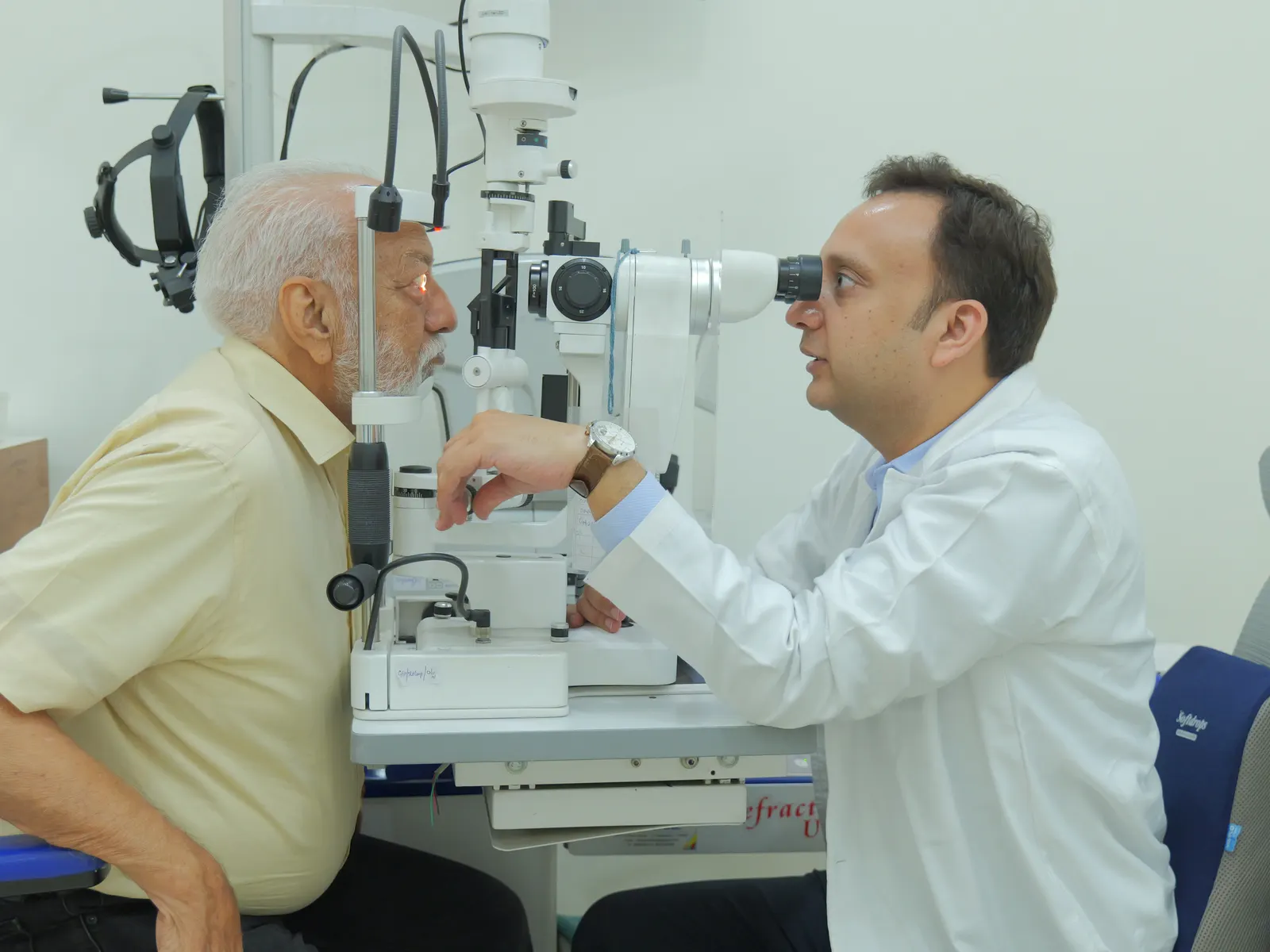
- 4Front of the eyeSlit lamp microscope for cornea and lens
- 5DropsPupil widens in 20 to 30 minutes
- 6Back of the eyeRetina and optic nerve, OCT when needed
- 7PlanThe doctor explains, then you decide
The machines that support this examination are listed on the hospital site: slit lamp, auto-refractometer, tonometer, OCT, A and B scan ultrasound, Pentacam and pachymeter for the cornea, and IOL Master and Lenstar for cataract lens power. You do not need to know how each one works. You do need to know that none of them replaces the doctor's judgement. The machine gives a number. The specialist decides what the number means for you.
How does Dr. Garg decide on a treatment?
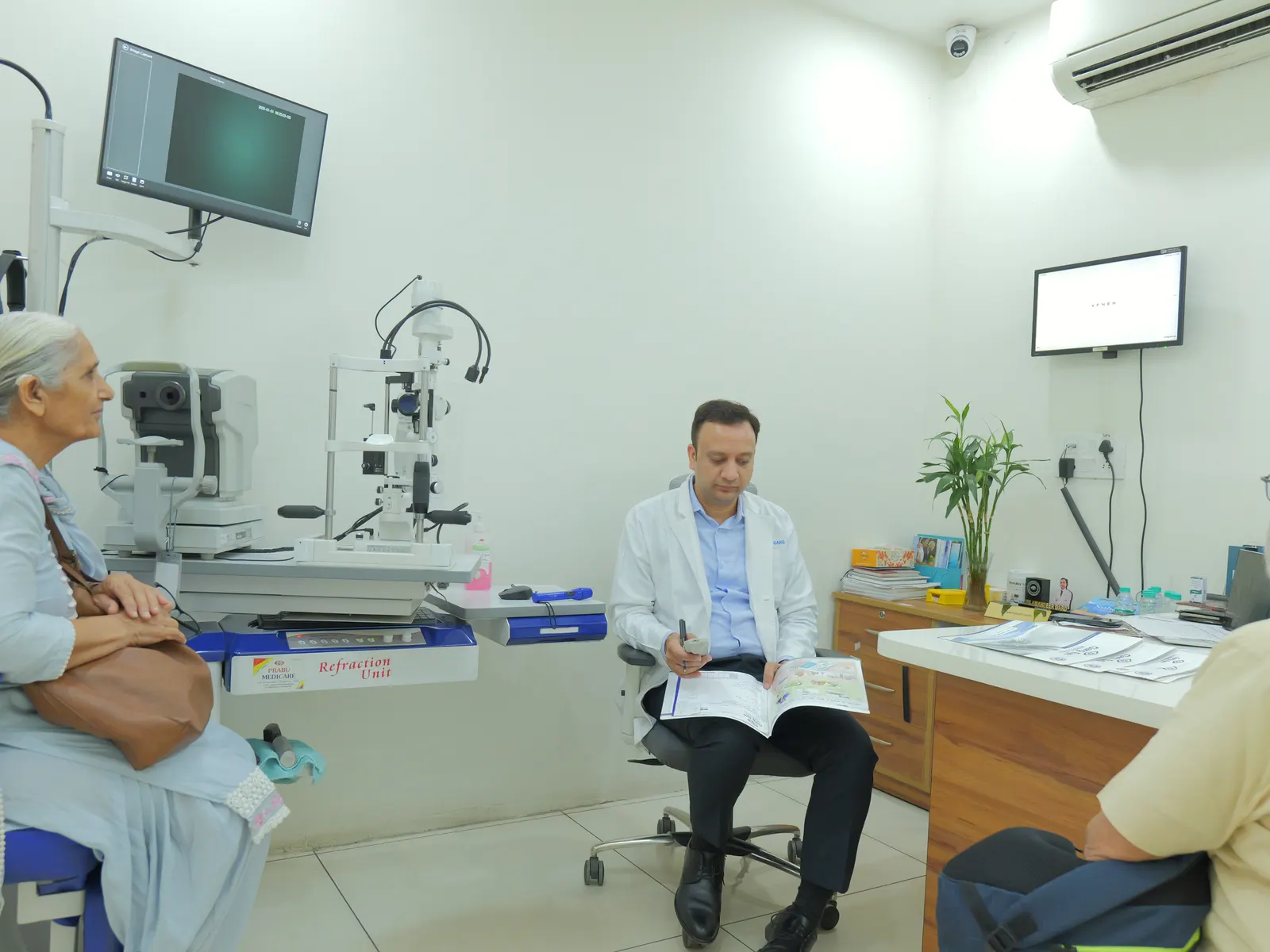
His approach, in plain words, has four parts. First he examines carefully. Second he explains what he found, in simple language, with the patient and family present. Third he lays out the options that suit your eye, which can include doing nothing for now. Fourth he lets you decide. Surgery is advised only when the examination supports it.
Patients describe the same pattern in their Google reviews. One patient wrote that the doctor "explained every step of the procedure with great clarity." Another wrote that he "takes the time to explain the entire process and the patient's condition very patiently." Read more on the patient reviews page.
Treatment is planned according to each patient's eye health, examination and medical history. Two people with the same number on a chart can need very different care. A diabetic with a mild cataract and a healthy 28 year old with the same power are not treated alike.
Which surgeries does the eye specialist perform?
Dr. Garg operates on the conditions below. The notes under each one say who it suits and what the limits are, because an honest list includes the limits.
Cataract surgery (phaco)
Cataract (motiyabind) is a clouding of the natural lens. It is treated by removing the cloudy lens and placing a clear artificial lens (IOL). Garg Eye Hospital uses the Stellaris phaco system for this. The operation is done under local anaesthesia and is usually a day-care procedure. Cataract surgery is the one eye operation that is claimable under most health insurance policies when it is medically needed. Read the full guide: cataract surgery in Patiala.
LASIK and laser vision correction
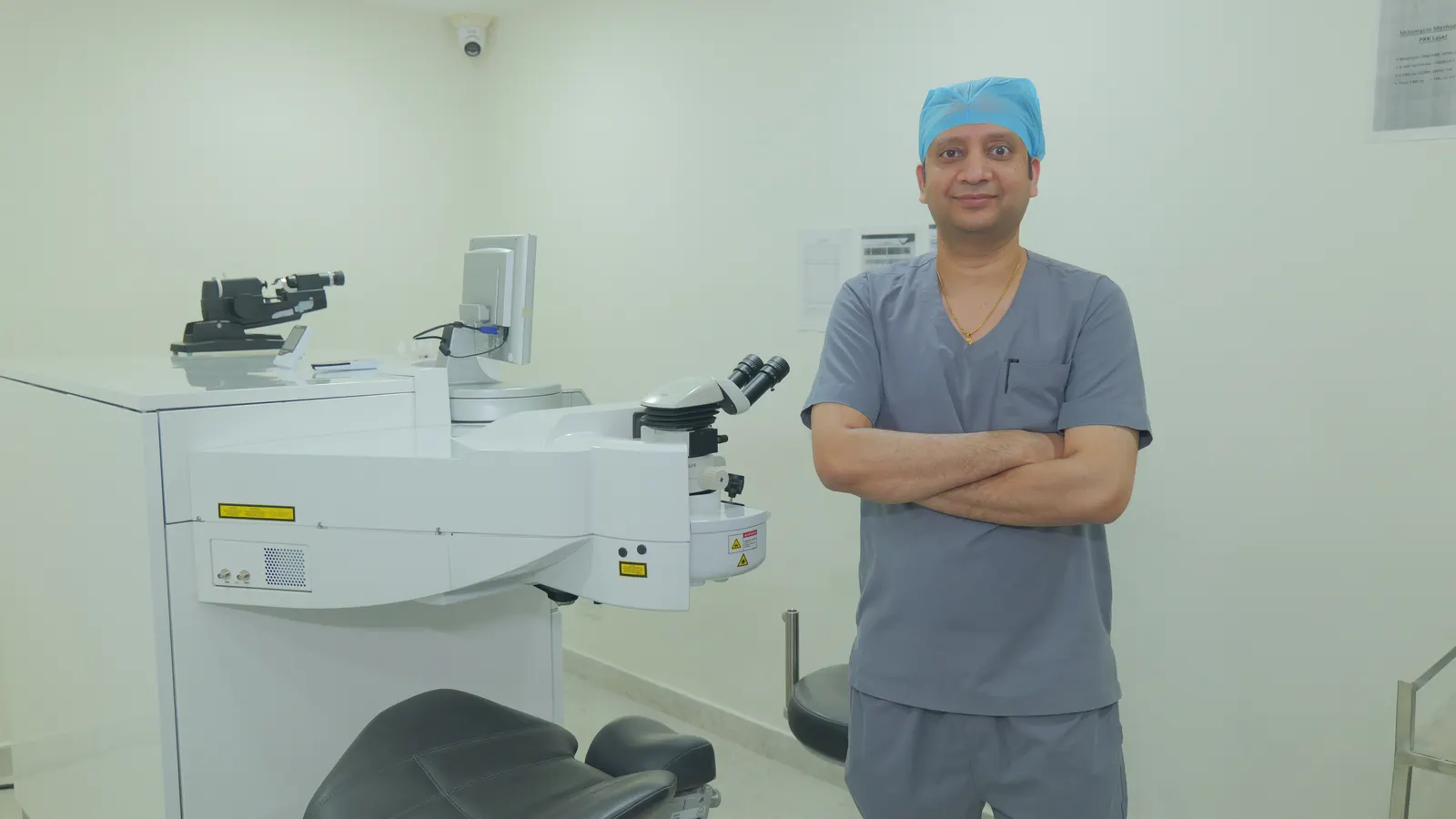
LASIK reshapes the cornea so the eye focuses without glasses. The hospital uses femtosecond and excimer lasers. It suits adults with a stable prescription, healthy corneas and no eye disease. It does not suit everyone. Thin corneas, an unstable power, active eye disease, some autoimmune conditions and pregnancy can rule it out. Corneal mapping with the Pentacam decides this before any promise is made. Read more: LASIK in Patiala.
ICL for suitable patients
Implantable Collamer Lens (ICL) is an option when LASIK is not safe, for example when the cornea is thin or the power is very high. A small lens is placed inside the eye, and no corneal tissue is removed. See ICL surgery in Patiala.
Glaucoma, retina and diabetic eye care
Glaucoma (kala motia) damages the optic nerve, usually without pain, and the lost side vision cannot be brought back. It is found by measuring eye pressure and looking at the optic nerve, and it is controlled by drops, laser or surgery. Diabetic eye disease is found by a dilated retina examination, and OCT shows the macula in detail. The hospital also offers retina examinations and diabetic eye screening. See glaucoma treatment and diabetic eye care.
Squint, lazy eye and eyelid care
The hospital treats children's eye problems, lazy eye and squint, and reconstructive and oculoplastic care for the eyelid and the tissue around the eye. Early treatment matters most in children, because the brain stops learning to use a weak eye after the early school years. See squint treatment and lazy eye treatment.
When should you see an eye specialist and not only an optician?
Use this table as a first filter. It does not replace an examination, and it errs on the side of seeing a doctor.
| Your situation | Eye test and glasses enough? | See an eye specialist? |
|---|---|---|
| Distant or near blur that glasses fix fully | Often yes | A check once a year is still wise |
| Glasses that need a stronger number every few months | No | Yes, to look for disease |
| Over 40 and never had an eye pressure test | No | Yes |
| Diabetes or high blood pressure | No | Yes, every year |
| Family history of glaucoma | No | Yes |
| New floaters, flashes or a dark curtain | No | Yes, soon |
| Child who squints, sits close to the screen or fails the school eye test | No | Yes |
| Red, painful or watering eye for more than a few days | No | Yes |
| Wish to remove glasses with LASIK | No | Yes, for suitability tests |
What do patients say about the eye specialist?
Patients rate Garg Eye Hospital 5.0 on Google from more than 1,500 reviews. Below are a few written about Dr. Garg, quoted from the hospital's Google listing. The full set is on the patient reviews page.
From the very beginning, Dr. Amandeep Garg impressed us with his polite, humble, and reassuring approach. He explained every step of the procedure with great clarity, which gave us complete confidence and peace of mind.
The doctor is extremely knowledgeable and takes the time to explain the entire process and the patient's condition very patiently, which really builds trust and comfort.
Dr.Amandeep himself is a thorough professionist, caring, humble and have a sympathetic corner for Seniors/Elders.
I have squint surgery and Dr Amandeep sir is so nice and coperative and all staff are polite
How do you choose an eye specialist you can trust?
Any doctor you consider, here or elsewhere, should pass six checks.
- Registration. A practising doctor has a state medical council registration number. Dr. Garg's PMC registration number is 36924.
- Qualification. Look for MBBS plus a postgraduate degree in eye care. Dr. Garg holds MBBS and DNB.
- Surgeon on the case. Ask who will operate. In many places the consultant examines you and a junior operates. Ask this question directly.
- Tests before advice. A doctor who recommends LASIK or surgery without corneal mapping or a dilated examination has skipped the part that keeps you safe.
- Willingness to say no. A good specialist tells some people they are not candidates. Ask what would make you unsuitable.
- Clear price and insurance answer. You should hear the cost range and whether your policy applies before you agree.
What should you bring and ask on your first visit?
Bring your old glasses, any earlier eye reports, a list of your medicines, and your blood sugar and blood pressure readings if you have them. If you plan to use insurance, bring the policy or card and an ID. Come with someone if you expect pupil drops, because near vision stays blurred for a few hours and you should not drive.
Questions worth asking Dr. Garg:
- What exactly is wrong with my eye, and how serious is it?
- Do I need treatment now, or can we watch it?
- What are my options, and what does each one cost?
- What are the risks and limits of the option you suggest?
- Who will operate, and what happens after surgery?
- Is this covered by my policy or scheme?
What does eye treatment cost, and can I use insurance?
Cost depends on the condition, the lens or laser chosen, and the policy you hold. The hospital gives the price after the doctor has examined you, because a number given before the examination is a guess. The page cost of eye treatment in Patiala shows public price ranges so you can plan.
The hospital works with a long list of insurers, TPAs (the firms that handle claims) and government schemes, including ECHS, Ayushman Bharat, SGPC and the Bhai Ghanhya Sehat Sewa Scheme. Cashless approval depends on your policy terms and needs pre-approval before admission. Cataract surgery and other medically needed operations are usually claimable. LASIK, ICL and premium lenses are usually treated as elective and are usually not covered. See insurance and empanelments.
Where and when can you meet the eye specialist?
Garg Eye Hospital is open for OPD from Monday to Saturday, 9 AM to 5 PM. Call +91 98554-91500 to book a time, so you do not wait for a slot on the day. The address and map are at the end of this page, and the OPD timings page explains how to plan your day. Patients also come from Nabha, Rajpura, Samana, Sirhind-Fatehgarh Sahib, Sangrur, Khanna and Malerkotla. You can book an appointment online at any hour and the desk will call you back during OPD hours.
Which other pages help you decide?
- Eye clinic in Patiala: how the OPD works, step by step.
- About Garg Eye Hospital: the story since 2016, the facilities and the team.
- Eye hospital in Patiala: the full range of treatments.
- Eye checkup in Patiala: what a complete check includes.
- Best eye treatments in Patiala: every treatment in one place.
- Eye hospital FAQ: more questions answered.
Frequently asked questions about the eye specialist in Patiala
Who is the eye specialist at Garg Eye Hospital in Patiala?
Dr. Amandeep Garg, MBBS, DNB, is the phaco and LASIK surgeon at Garg Eye Hospital. He specialises in cataract surgery and laser vision correction and sees patients in the OPD from Monday to Saturday, 9 AM to 5 PM.
What is the difference between an eye specialist and an ophthalmologist?
There is no difference in practice. Both words describe a medical doctor with postgraduate training in eye disease and eye surgery. An optometrist tests vision and prescribes glasses. An ophthalmologist also treats disease and operates.
Do I need a referral to see an eye specialist?
No. You can book directly by calling +91 98554-91500 or using the booking page. Bring any earlier reports and your current glasses.
How long does a first visit take?
Plan for half a day if you want a full examination with pupil drops. The drops need 20 to 30 minutes to widen the pupil, and the tests are done in order. If you come with a clear symptom, tell the desk so the visit is planned for it.
Will I need pupil drops, and can I drive afterwards?
A complete eye examination usually includes drops that widen the pupil so the doctor can see the retina. Near vision and sensitivity to light last for a few hours. Do not drive yourself home. Bring a family member or arrange a ride.
Is the doctor who examines me the one who operates?
At Garg Eye Hospital, Dr. Amandeep Garg is the phaco and LASIK surgeon. Ask the desk who will operate on your case when you book, and ask the doctor again at the consultation.
Which eye problems do you treat?
Cataract, refractive errors with LASIK and ICL, glaucoma, retina and diabetic eye problems, children's eye care, lazy eye and squint, and eyelid and oculoplastic conditions. Each has its own page on this site.
Can an eye specialist tell me if I am suitable for LASIK?
Yes, but only after tests. Corneal mapping, corneal thickness, a stable prescription for at least a year and a healthy eye are checked first. If LASIK is unsafe for your eye, ICL or another option may be suggested.
What is the cost of an eye specialist consultation?
The desk quotes the consultation fee when you call. Treatment costs depend on the condition and the lens or laser used, and the doctor gives the price after the examination.
Does the hospital accept insurance and government schemes?
Yes, with many insurers, TPAs and government schemes, including ECHS, Ayushman Bharat, SGPC and the Bhai Ghanhya Sehat Sewa Scheme. Cashless approval depends on your policy and needs pre-approval before admission.
My child squints. Should I see an eye specialist?
Yes, as early as possible. The hospital treats children's eye care, lazy eye and squint. Glasses, patching or surgery may be advised depending on the cause.
I have diabetes. How often should an eye specialist check my eyes?
At least once a year, even if your sight feels fine. Early diabetic eye disease has no symptoms. A dilated retina examination finds it before it harms your sight.
Can I get a second opinion on surgery advised elsewhere?
Yes. Bring your reports and tell the desk it is a second opinion. The doctor will examine you afresh and explain whether he agrees with the advice and why.
Does Dr. Garg treat patients from outside Patiala?
Yes. Patients come from Nabha, Rajpura, Samana, Sirhind-Fatehgarh Sahib, Sangrur, Khanna, Malerkotla and other towns. Most tests are done in one visit, which keeps the number of trips low.
What should I do if I have a sudden eye injury or sudden loss of sight?
Go to the nearest hospital with an emergency department straight away, then call Garg Eye Hospital on +91 98554-91500 during OPD hours. Do not rub the eye, do not put in any drops that were not prescribed for you, and do not wait to see if it settles.
Contact Garg Eye Hospital, Patiala
Passey Road, Near Gurudwara Dukh Niwaran Sahib, Patiala, Punjab 147001
Phone: +91 98554-91500
Email: gargeyehosp@gmail.com
OPD: Monday to Saturday, 9 AM to 5 PM
Open the map