
Specs removal options · Patiala
Specs Removal Surgery in Patiala: LASIK, SMILE, PRK, ICL and Lens Exchange Compared
“Chashma hatana” can mean different procedures. LASIK, Contoura, SMILE, PRK, ICL and lens exchange are not interchangeable; each suits different eyes.
A scan-based examination helps the surgeon explain which options may fit your prescription, cornea, eye health and expectations.
Book an eye assessment Call 0175-2309500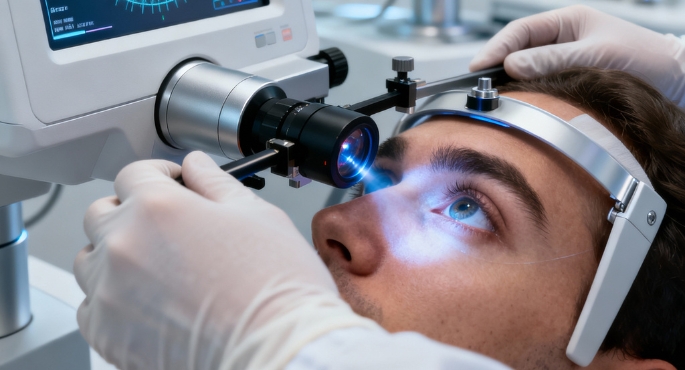
Chashma hatana kya hota hai?
What does specs-removal surgery actually do?
Glasses correct how light focuses inside the eye. Refractive surgery changes the way the eye focuses—either by reshaping the cornea with a laser or by placing a lens inside the eye.
The aim is to reduce glasses or contact-lens dependence for daily activities. Some people may still need glasses for particular tasks or later for reading.
There is no one “best” operation for everyone
The most suitable option depends on prescription, corneal shape and thickness, dry eye, age, eye health and what you expect from treatment.
Understand your number
Why might someone need glasses?
Myopia · minus power
Distance vision may be blurry when the eye focuses light in front of the retina.
Hyperopia · plus power
Near work may feel difficult; higher prescriptions can affect distance too.
Astigmatism · cylindrical power
The cornea’s shape can make vision blurred or distorted at different distances.
Presbyopia is a separate age-related change in near focusing, often noticed after 40. Refractive surgery does not stop it.
Compare the options
Common specs-removal procedures
LASIK / Femto LASIK
Reshapes the cornea. Femto LASIK uses a femtosecond laser to create the flap. Screening checks if the cornea is suitable.
LASIK detailsContoura Vision
Uses corneal mapping to guide treatment for selected patients. The scan and prescription determine suitability.
Contoura Vision detailsSMILE
A different laser procedure that removes a small piece of corneal tissue through a small incision.
SMILE detailsPRK / TransPRK
Reshapes the cornea from its surface without creating a LASIK flap. Healing and comfort differ from LASIK.
ICL
An implantable lens is placed inside the eye. It may be considered for selected prescriptions or corneas.
ICL detailsRefractive lens exchange
Replaces the eye’s natural lens. It is a different operation and is considered only for selected patients.
At a glance
How the procedures differ
| Option | What it changes | May be discussed when | Important consideration |
|---|---|---|---|
| LASIK / Femto LASIK | Reshapes the cornea | Prescription is stable and corneal scans are suitable | Corneal thickness, shape and dry eye matter |
| Contoura | Map-guided corneal laser treatment | Detailed corneal mapping supports it | Not every eye benefits from the same treatment profile |
| SMILE | Removes a small lenticule through an incision | Prescription and cornea fit the procedure | Has its own eligibility criteria and recovery |
| PRK / TransPRK | Reshapes the corneal surface | A surface laser is preferred for selected eyes | Early recovery may be less comfortable |
| ICL | Adds an implantable lens inside the eye | Selected higher prescriptions or corneal profiles | It is intraocular surgery and needs its own assessment |
| Lens exchange | Replaces the natural lens | Selected age, lens and vision situations | Different risks and considerations from corneal laser |
This table is a broad guide, not a recommendation. Your surgeon must assess your eyes before choosing a procedure.
Prescription and age
Does your glasses number decide the procedure?
Prescription is one part of the decision. The cornea’s shape and thickness, eye health and prescription stability also matter. Higher numbers may need a different option such as ICL, depending on the full examination.
The plan gives rough prescription ranges for laser procedures, but these are not eligibility cut-offs. Limits vary with equipment, measurements and individual eyes. The doctor must confirm your own range after scans.
Younger people with a changing prescription may be asked to wait. After about 40–45, near vision changes and reading glasses should be part of the discussion.
Screening comes first
What does the surgeon check?
Prescription stability
The doctor reviews your current glasses number and whether it has changed recently.
Corneal mapping
Scans assess corneal shape and help identify irregularity or keratoconus risk.
Corneal thickness
Thickness is one factor in deciding whether a corneal laser procedure is appropriate.
Dry eye and eye surface
Dry eye or an active surface problem may need treatment or may affect procedure choice.
Retina and optic nerve
Other eye conditions may affect expected results or the recommendation.
Health and life stage
Diabetes control, medicines, pregnancy or breastfeeding may affect timing and suitability.
Realistic expectations
Will surgery remove glasses forever?
The goal is to reduce dependence on glasses or contact lenses. Some people may still need a light prescription for particular tasks, and reading glasses may be needed later due to presbyopia.
Exercises and drops do not remove refractive power
Eye exercises, diet and drops cannot reshape the cornea or permanently remove a glasses prescription. They may support general eye comfort or health for other reasons, but do not replace an assessment.
Risks and trade-offs
Understand risks before deciding
Refractive surgery is still surgery. Possible effects vary by procedure and patient and may include dry eye, glare, halos, under-correction or a change in prescription over time. Rare complications can be serious.
Ask the surgeon what risks are most relevant to your eyes, what result is realistic and what follow-up is required. No procedure can guarantee perfect vision for every person.
Recovery
Recovery varies by procedure
LASIK / SMILE
Many patients resume some routine work within a few days, subject to the surgeon’s review and instructions.
PRK / surface laser
Early recovery can take longer and may be less comfortable than LASIK. Follow the clinic’s care plan.
ICL / lens-based surgery
These procedures have different aftercare and follow-up. Ask your surgeon what applies to your plan.
Use prescribed drops, avoid rubbing your eyes and attend follow-up. Do not drive or resume activities until your doctor says it is safe.
Cost · Patiala
Specs-removal surgery cost
The plan gives approximate November 2026 market ranges of about ₹10,000–₹80,000 per eye depending on the procedure. A clinic’s estimate depends on the examination, procedure, tests and package inclusions. These are guides—not a quote.
| Procedure | Indicative market range per eye |
|---|---|
| Basic blade LASIK | About ₹10,000 |
| Femto-based LASIK / Contoura | About ₹25,000–₹60,000 |
| SMILE | About ₹60,000 |
| ICL | About ₹50,000–₹80,000 |
Prices are indicative market ranges, not hospital rates. Confirm the current estimate, per-eye or both-eye pricing, tests, medicines and follow-up inclusions with the desk.
Insurance
Does insurance cover specs-removal surgery?
Refractive surgery is often treated as elective and may not be covered. Policy terms and exceptions vary. Confirm your own policy before planning treatment.
Check before the procedure
Ask the insurer whether the specific procedure is covered, what documents are needed and whether pre-approval is required.
Insurance and cashless informationFrequently asked questions
Specs-removal surgery FAQs
Which specs-removal surgery is best?
There is no single best procedure for everyone. LASIK, Contoura, SMILE, PRK, ICL and lens-based procedures suit different eyes. The surgeon recommends an option after examination and scans.
Is specs-removal surgery safe?
It may be appropriate for carefully selected patients, but every procedure has risks. Screening, informed consent and follow-up are important. Ask about the risks that apply to your eyes.
Is specs-removal surgery painful?
Anaesthesia is used, but the experience and recovery differ by procedure. Surface laser recovery may be more uncomfortable than LASIK for some patients. Ask your surgeon what to expect.
Is specs-removal surgery permanent?
The corneal change from laser surgery is intended to last, but the eye can change over time. Presbyopia and other eye conditions can still occur later.
Can specs be removed without surgery?
Contact lenses can replace glasses while worn, but they do not permanently change the eye. Exercises, diet or drops do not permanently remove spectacle power.
What is the right age for specs-removal surgery?
Age alone does not decide. A stable prescription and a suitable eye examination are important. The doctor also considers near-vision changes and eye health.
What power can laser surgery correct?
Limits depend on the procedure, corneal shape and thickness, prescription and device. A scan-based examination is needed to know whether your power can be treated safely.
Will I need reading glasses after surgery?
Possibly. Presbyopia is an age-related change in near focusing and is not prevented by distance vision correction.
Can I have surgery if my cornea is thin?
Thin corneas may rule out some procedures, but alternatives may be discussed for selected eyes. Corneal mapping and examination determine what is suitable.
Does insurance cover specs-removal surgery?
It is often excluded as elective treatment, but policy terms vary. Check with your insurer before making a plan.
How do I book a consultation in Patiala?
Call 0175-2309500 or contact the hospital to arrange an eye assessment. Bring previous glasses prescriptions and follow instructions about contact lenses before testing.
Related pages
Explore each procedure
LASIK · LASIK cost · Contoura Vision · SMILE · ICL · Keratoconus · Dry eye · Eye checkup
Vision correction · Patiala
Start with an eye assessment
Discuss your prescription, scans, possible procedures, risks and costs with an eye doctor before deciding.
Book an assessment Call 0175-2309500 WhatsApp +91 98554 91500OPD Monday–Saturday, 9:00 AM–5:00 PM. Sunday closed.
This page provides general information and does not replace an eye examination. Procedure suitability, results, risks, recovery and cost vary. Discuss your own case with a qualified ophthalmologist.