
Laser vision correction · Patiala
LASIK Surgery in Patiala: Blade-Free Laser Eye Surgery to Reduce Your Dependence on Glasses
LASIK reshapes the cornea to correct some types of short-sightedness, long-sightedness and astigmatism. An eye examination and corneal tests are needed before a doctor can say whether LASIK may be suitable for you.
LASIK is an elective procedure. It does not prevent age-related reading-glass needs, and it is not right for everyone.
Medically reviewed by: Dr. Amandeep Garg, MBBS,
DNB (Ophthalmology), PMC 36924.
Last reviewed: November 2026.
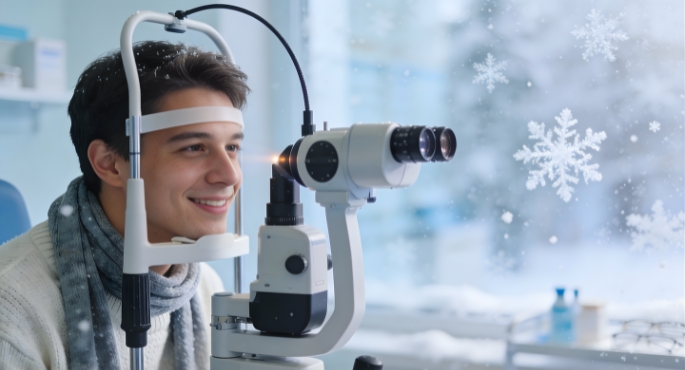
Quick answer
LASIK at a glance
LASIK uses a laser to reshape the cornea—the clear front surface of the eye. Whether it is suitable depends on your prescription, corneal shape and thickness, eye health and medical history.
Understand the procedure
What is LASIK?
The cornea helps focus light into the eye. If its shape contributes to a glasses prescription, LASIK may reshape the cornea so light is focused differently.
During LASIK, the surgeon prepares a thin corneal flap, applies a laser to reshape tissue underneath it, and places the flap back. The exact technique depends on the equipment and the treatment plan.
LASIK may be used for some prescriptions involving myopia (short-sightedness), hyperopia (long-sightedness) and astigmatism. It does not treat cataract, retinal disease or optic-nerve disease.
Compare options
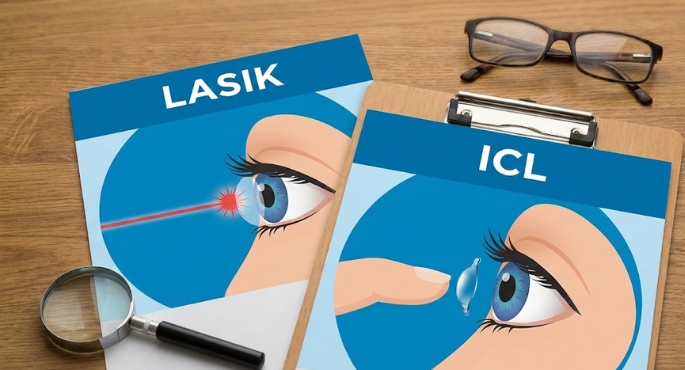
LASIK, SMILE, PRK and ICL
“Laser eye surgery” can refer to different procedures. These options are not interchangeable; the ophthalmologist decides what may be appropriate after examination.
LASIK
A corneal laser procedure that includes creating a thin flap.
Blade-free / femto LASIK
A femtosecond laser is used for the flap step; suitability depends on the eye.
PRK / surface laser
A surface-based laser approach may be discussed for selected patients.
SMILE
A different flap-free laser procedure, where available and suitable.
ICL
A lens-based option, not a laser procedure, that may be discussed for some prescriptions.
Contoura
A topography-guided LASIK approach; ask the doctor whether it is suitable for you.
Suitability
Who may be suitable for LASIK?
LASIK is an elective choice. Age alone does not determine suitability. The doctor considers your prescription, whether it has been stable, corneal thickness and shape, eye surface health and medical history.
Assessment may consider
- Whether your glasses prescription has been stable
- Corneal thickness and shape on scans
- Dry eye or other eye conditions
- Current medicines and general health
- Your visual needs and expectations
LASIK may not be advised when
- The cornea is too thin or has an irregular shape
- The prescription is still changing
- There is significant dry eye or active eye disease
- Other eye or health conditions need attention first
The doctor may discuss alternatives—or recommend no surgery.
Before deciding
How we assess your eyes before LASIK
Prescription check
The team checks your glasses number and whether it has been stable.
Corneal mapping
Scans help assess the shape and thickness of your cornea.
Eye-surface assessment
The doctor may assess dryness or other conditions that can affect suitability.
Retina and eye health
Other parts of the eye may be checked based on your history and examination.
Discuss your goals
Tell the doctor about work, sports, driving and when you use glasses.
Review alternatives
Ask which options may fit your eyes and what each one can and cannot do.
Informed decision
LASIK risks and possible side effects
LASIK is not risk-free. Possible side effects include dry eyes, glare, halos, fluctuating vision or a remaining glasses prescription. Less common complications can affect the cornea or vision.
Your own risks depend on the examination and health of your eyes. Ask your surgeon what risks apply to you, what alternatives are available and what happens if you decide not to have surgery.
After LASIK
Recovery and follow-up
Recovery differs between patients. Follow the surgeon’s instructions for eye drops, eye protection, work, driving, exercise and follow-up. Do not drive until your doctor says your vision is safe for driving.
Keep follow-up visits
Attend the checks advised by your surgeon, even if your vision feels clear.
Call if symptoms worsen
Contact the hospital promptly if you have increasing pain, sudden vision loss or concerning redness.
Cost information
LASIK surgery cost in Patiala
The supplied plan lists a typical market range of about ₹25,000–₹60,000 per eye for femto-based LASIK. This is not a confirmed Garg Eye Hospital quote; confirm current prices and package details with the hospital.
The final cost may depend on examination, tests, procedure or technology chosen and what the package includes. Ask for a current estimate after your assessment.
For a cost estimate or appointment, contact the hospital team.
Common questions
LASIK surgery FAQs
Is LASIK suitable for everyone?
No. Suitability depends on your prescription, cornea, eye health and examination results.
Is LASIK painful?
Numbing drops are used. Ask your surgeon what you may feel during the procedure and recovery.
Does LASIK permanently remove the need for glasses?
LASIK may reduce dependence on glasses, but it cannot guarantee that you will never need glasses again. Reading glasses may still be needed with age.
Can I have LASIK if I have dry eyes?
The doctor needs to assess the severity of dryness and your cornea before advising about LASIK or alternatives.
How much does LASIK cost in Patiala?
The supplied plan lists a general market range, not a hospital quote. Contact the hospital for a current estimate after assessment.
When can I return to work or drive?
This depends on your vision, work and recovery. Follow your surgeon’s advice and do not drive until you are cleared to do so.
What alternatives may be discussed?
Depending on your eyes, the doctor may discuss PRK, SMILE, Contoura or ICL—or advise against surgery.
Garg Eye Hospital · Patiala
Thinking about LASIK?
Start with an eye examination. The doctor can discuss whether LASIK or another option may be suitable for you.
Book an assessment Call 0175-2309500 WhatsAppThis page gives general information and does not replace an eye examination. Results, risks and costs differ between patients. Please consult a qualified ophthalmologist for advice about your eyes.