
Glaucoma care · Patiala
Glaucoma Treatment in Patiala: Tests, Drops, Laser, Surgery and Lifelong Follow-up
Glaucoma, often called kala motia, affects the optic nerve. It may progress without obvious early symptoms. Treatment aims to control eye pressure and help protect the vision you still have.
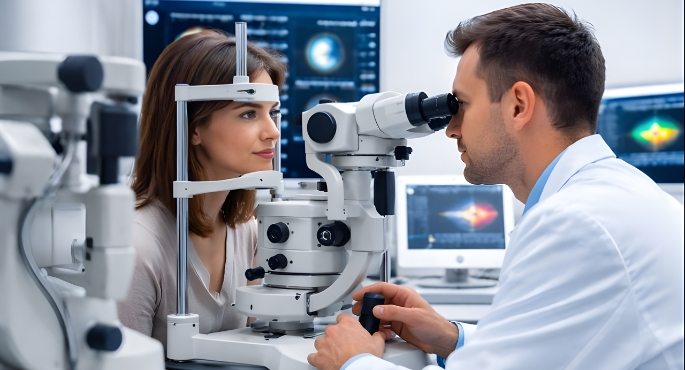
An eye examination may include pressure measurement, optic-nerve assessment, OCT or visual field tests, depending on your case.
Medically reviewed by: Dr. Amandeep Garg, MBBS,
DNB (Ophthalmology), PMC 36924.
Last reviewed: November 2026.

Quick answer
Glaucoma at a glance
Glaucoma is a group of eye conditions that can damage the optic nerve. The damage already done cannot usually be reversed, so ongoing assessment and treatment are important.
Understand glaucoma
What is glaucoma?
The optic nerve carries visual information from the eye to the brain. Glaucoma can damage this nerve, sometimes gradually and without pain. Eye pressure is an important risk factor, but pressure alone does not determine whether someone has glaucoma.
Some people can have glaucoma even when a pressure reading is within the usual range. That is why doctors may also examine the optic nerve and use tests such as OCT or visual field testing.
Kala motia is not the same as safed motia (cataract). Cataract affects the lens; glaucoma affects the optic nerve. Read about cataract care.
Different types need different assessment
- Open-angle glaucoma
- Angle-closure glaucoma
- Normal-tension glaucoma
- Secondary glaucoma related to another condition
- Childhood or congenital glaucoma
The ophthalmologist will explain which type, if any, applies to you.
Signs and symptoms
Why glaucoma can be hard to notice
Open-angle glaucoma may progress slowly and without pain. Some people do not notice changes until side vision has been affected. A normal vision-chart result does not replace an eye examination.
Side vision changes
Some people notice difficulty seeing objects at the edge of their vision.
Family history
Tell your doctor if a close family member has glaucoma.
Previous eye concerns
Past injury, inflammation or long-term steroid use may be relevant to your assessment.
Get urgent medical attention for sudden severe symptoms
Severe eye pain, a red eye, sudden blurred vision, halos around lights, headache or nausea can require urgent assessment. Contact an eye doctor or go to the nearest emergency service.
Read eye emergency informationGlaucoma assessment
What tests may be used?
No single test always gives the full picture. Your doctor may combine examination findings and test results, and compare them over time.
Eye pressure
Measures pressure inside the eye.
Optic nerve check
The doctor examines the nerve at the back of the eye.
OCT scan
Creates images that can help assess nerve-fibre layers.
Visual field test
Checks how well you see across different areas of your visual field.
Drainage-angle check
May help the doctor understand the type of glaucoma.
Corneal thickness
May be measured to help interpret pressure readings.
Treatment options
How is glaucoma treated?
Treatment is chosen according to the type of glaucoma, eye pressure, nerve health, test results and how the condition changes over time. The doctor will discuss what each option can and cannot do.
Eye drops
Prescription drops may help lower eye pressure. Use them as directed and do not stop or change them without asking your doctor.
Laser treatment
Depending on the glaucoma type, laser may be discussed to help manage pressure or improve fluid drainage.
Surgery
Surgery may be considered if other treatment is not controlling pressure or the condition is progressing.
Glaucoma treatment aims to reduce the chance of further damage. It cannot bring back vision already lost to optic-nerve damage.
Long-term care
Why follow-up matters
Glaucoma can change over time, even when you feel well. Your doctor may schedule pressure checks, optic-nerve examinations, OCT or visual field tests at intervals suited to your condition.
Keep your appointments and bring all eye-drop bottles or a current medicine list. If drops cause irritation or are difficult to use, tell your doctor rather than stopping them yourself.
Cost information
Glaucoma test and treatment costs in Patiala
The supplied content plan lists these as general local ranges, not Garg Eye Hospital’s confirmed prices. Confirm current costs with the hospital after assessment.
| Service | Indicative range in the plan |
|---|---|
| Pressure, OCT and visual field tests | About ₹1,000–₹3,000 combined |
| Laser or surgery | About ₹30,000–₹50,000; depends on procedure |
The final cost depends on examination, tests, treatment and what is included. Ask the hospital desk for a current estimate.
Insurance and travel
Planning glaucoma care
Ask the insurance desk whether your policy and proposed treatment are currently covered. Approval depends on policy terms, limits and insurer pre-authorisation.
If travelling from Nabha, Rajpura, Samana, Sangrur or nearby towns, call ahead to confirm timings and what reports or medicines to bring.
Insurance informationBring to your appointment
- Previous eye reports and prescriptions
- All eye-drop bottles or a medicine list
- Insurance card and photo ID, if applicable
- Details of family history of glaucoma, if known
Clear information
Glaucoma myths and facts
“Glaucoma always hurts”
Some forms may progress without pain or obvious early symptoms.
“Laser or surgery cures it”
Treatment may help manage pressure, but ongoing monitoring may still be needed.
“Kala motia is cataract”
Glaucoma and cataract are different conditions and need different assessment.
Common questions
Glaucoma treatment FAQs
Can glaucoma be cured?
Glaucoma is usually managed over time. Treatment aims to protect remaining vision; it cannot reverse optic-nerve damage that has already occurred.
Is glaucoma the same as kala motia?
Kala motia is a common name for glaucoma. It is different from safed motia or cataract.
Can glaucoma occur with normal eye pressure?
Yes, glaucoma can affect the optic nerve even when a pressure reading is within the usual range. Doctors may use other examination findings and tests too.
What tests may be used to check for glaucoma?
Tests may include eye pressure measurement, optic-nerve examination, OCT, visual field testing and an assessment of the drainage angle. Your doctor decides which tests are needed.
Will I need to use glaucoma drops long term?
Some people need long-term drops. Do not stop or change prescribed drops without speaking with your doctor.
Can vision lost to glaucoma come back?
Optic-nerve damage from glaucoma is generally permanent. Treatment aims to help protect the vision that remains.
How often do I need follow-up?
The schedule depends on your test results and how stable the condition is. Follow the intervals set by your ophthalmologist.
Glaucoma care · Patiala
Book an eye examination
Contact Garg Eye Hospital to ask about appointments, OPD hours and what to bring for your visit.
Book an appointment Call 0175-2309500 WhatsAppThis page gives general information and does not replace an eye examination. Please consult a qualified ophthalmologist for advice about your own eyes.